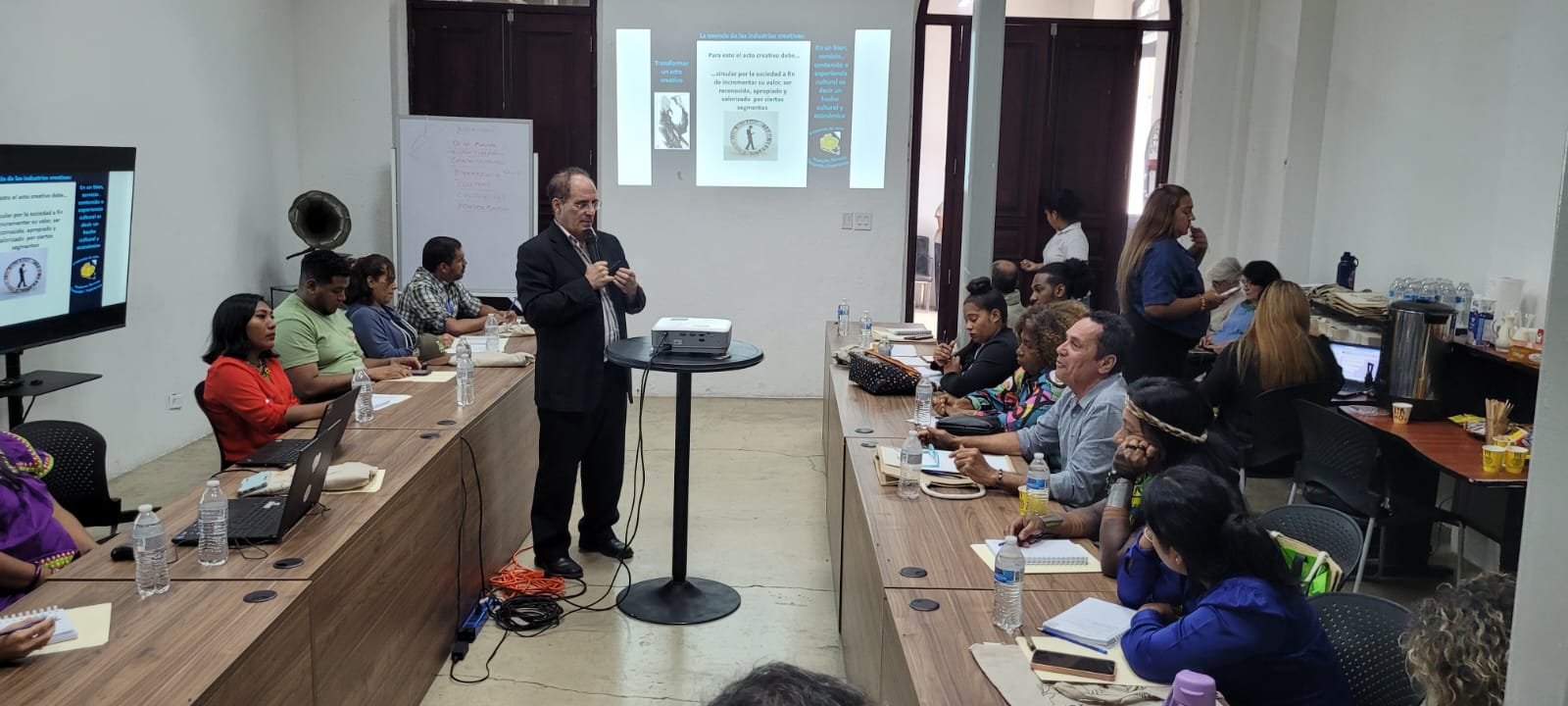
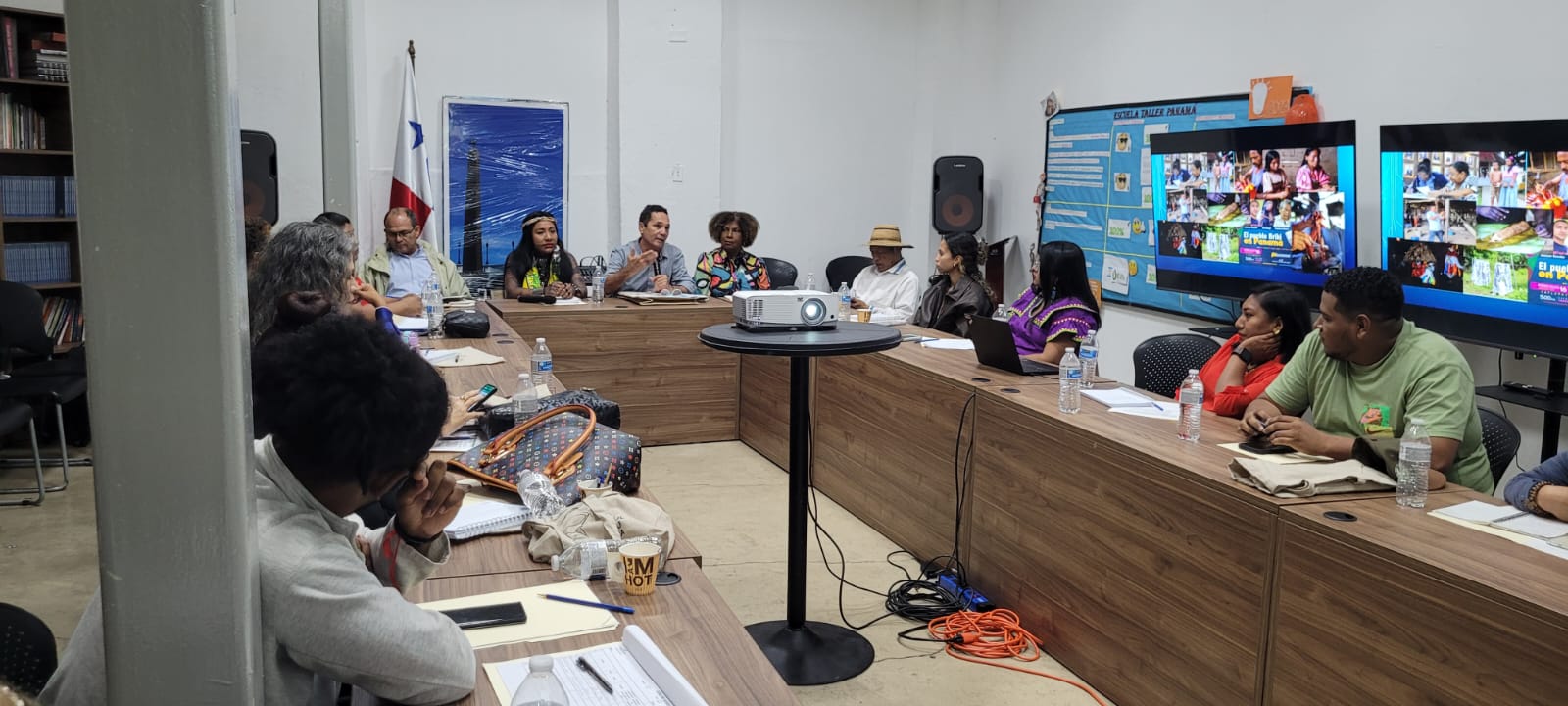
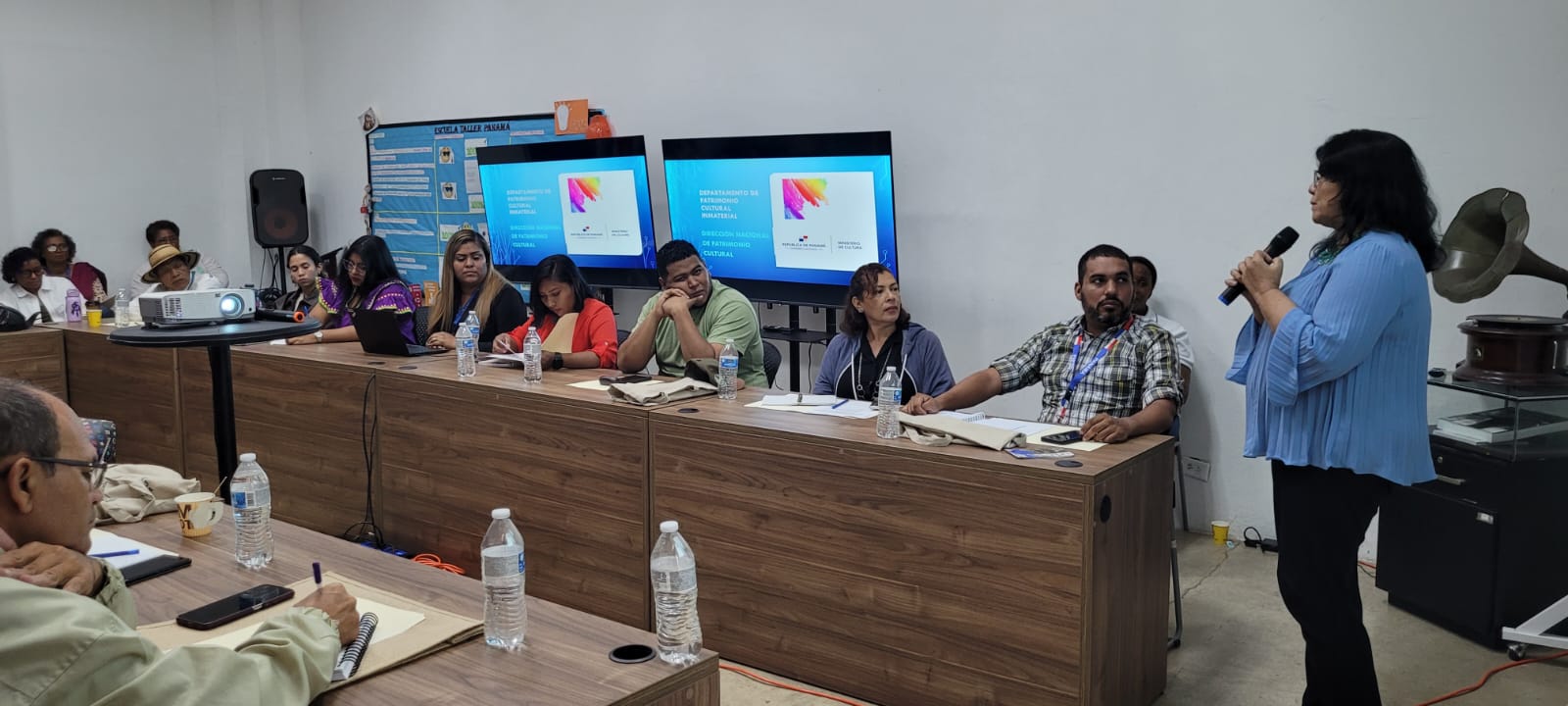
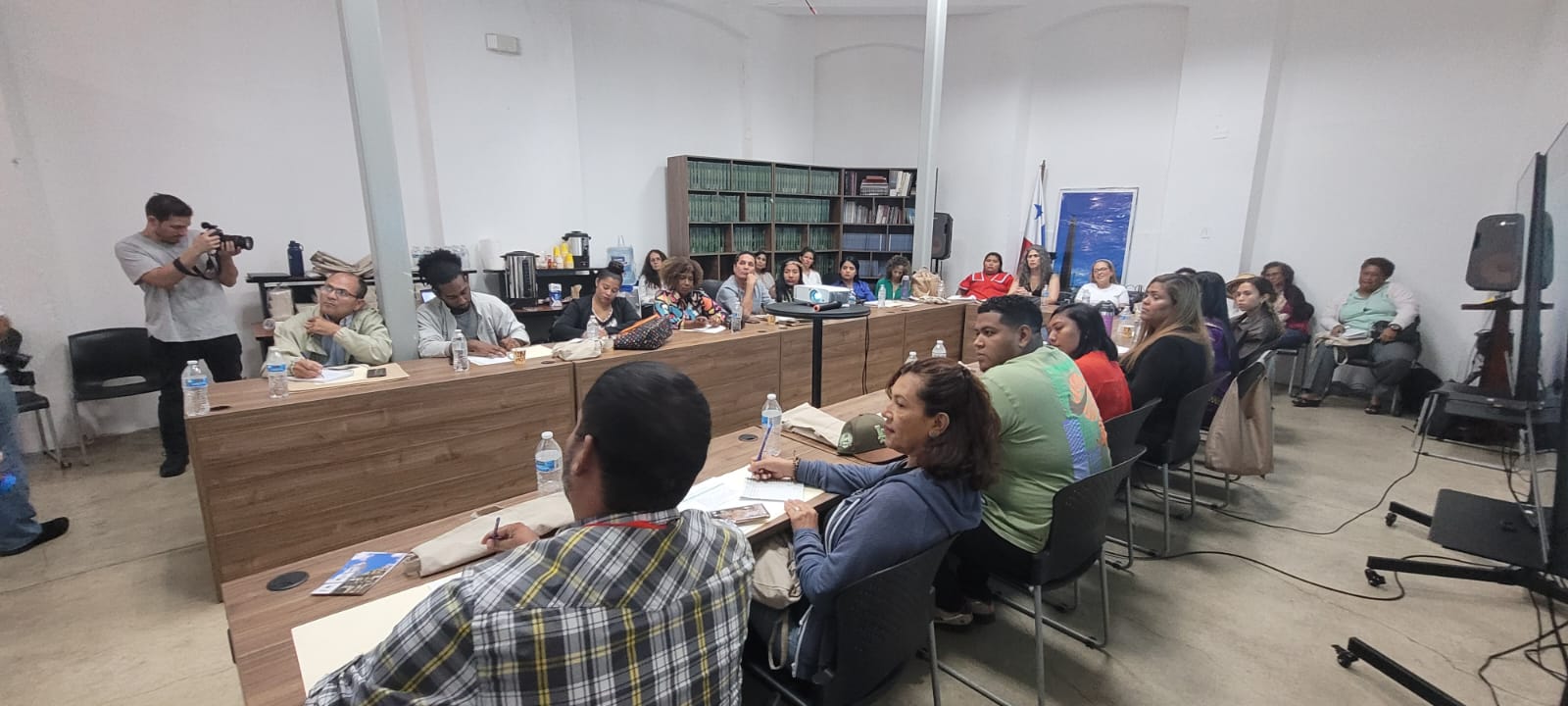
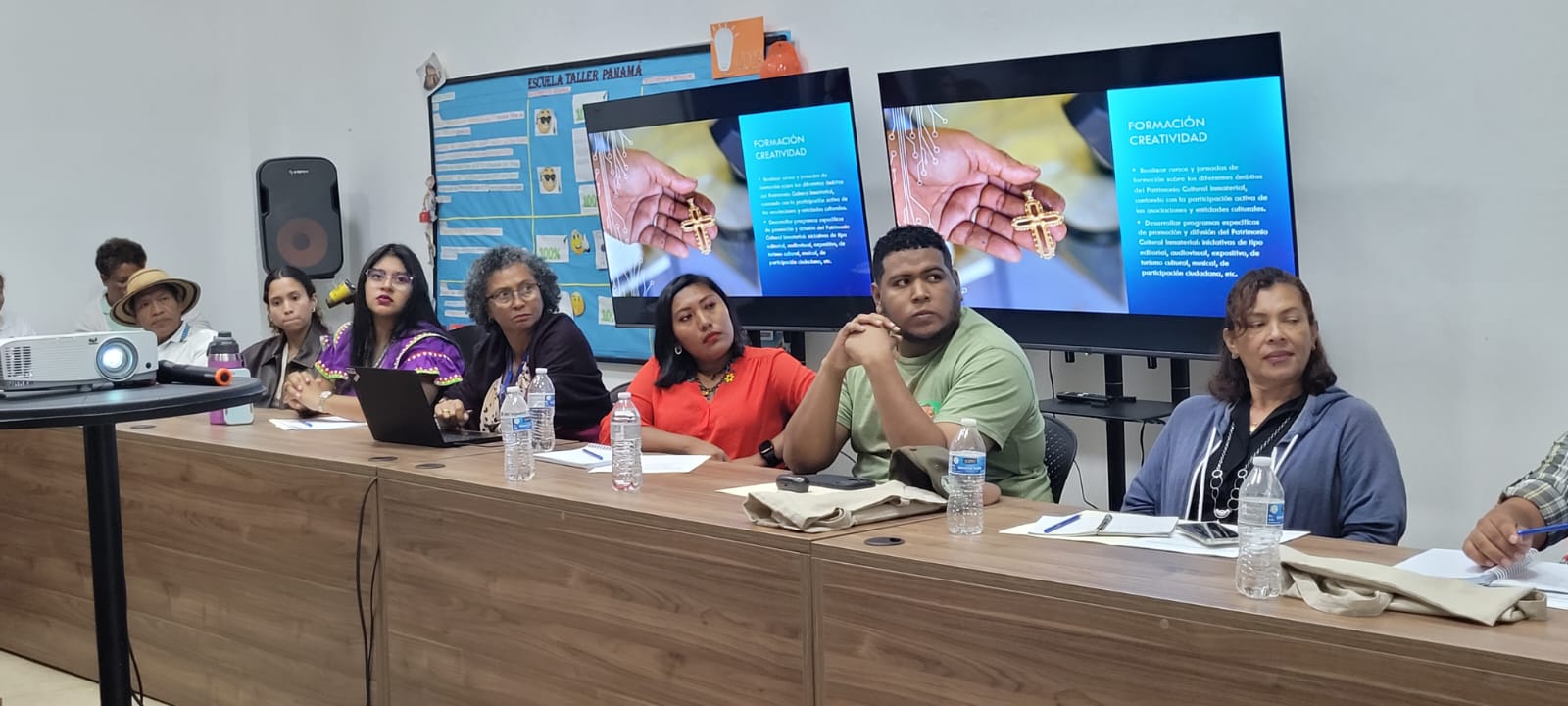
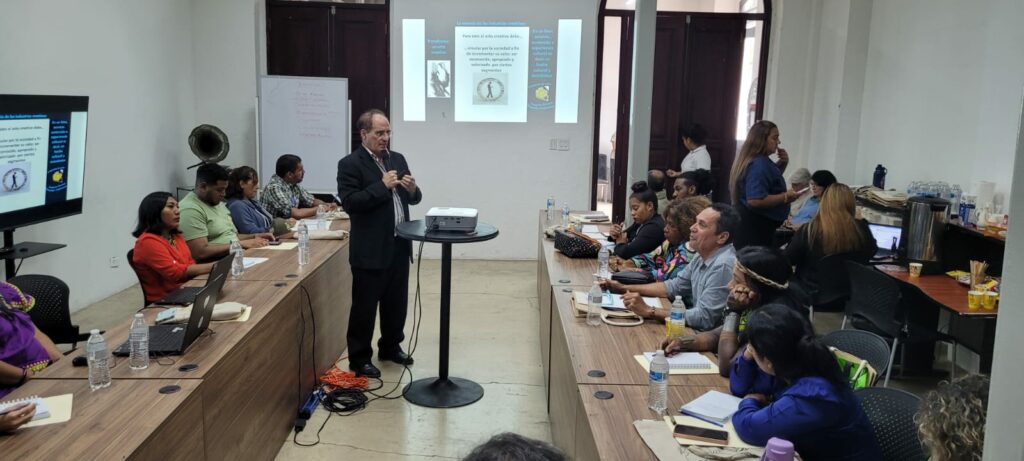
On the agenda of the first Vivo Center Forum, a workshop day was held under the theme "World Heritage in Creative City: Roadblocks for the sustainable development of Panama City's historic centre," with participants from different sectors of creative and cultural industries.
That day that corresponds to the second day of the Centro Vivo Forum, organized by the Ministry of Culture (MiCultura), attendees have expanded concepts about the creative economy and its application as a cultural experience for their areas, about that need to innovate and sell experiences from culture, transforming the creative fact into an economic value.
These concepts were put into place at a conference entitled "To start with Culture: What Is Creative Economics?" by Gerardo Neugovsen, consultant to the Creative Economics Section of MiCultura, who interacted with the participants and responded to their concerns.
It was later the turn of Catalina Baterman of the Andrés Bello Convention, who outlined the benefits of the satellite account and its impact at regional level.
"The plans to safeguard the intangible cultural heritage," was another issue addressed, with Emma Gomez, Head of Intangible Cultural Heritage from MiCultura developing and highlighting processes such as identification, documentation and valuation, among others to achieve these plans as a social agreement.
The day ended with a dialogue with Blas Quintero, professor at the School of Anthropology UP / ACUN Foundation, Leticia Levy, president of the congo brotherhood of María Chiquita, Eduardo Cano, researcher at the pollera and director of Education, Culture and Sport, of the municipality Omar Torrijos Herrera and Andrea Lino Machi, president of Tourism, second nokó, advisor to the General Congress of Social and Social Lands, who shared their experiences and proposals for safeguard plans from their different sectors.