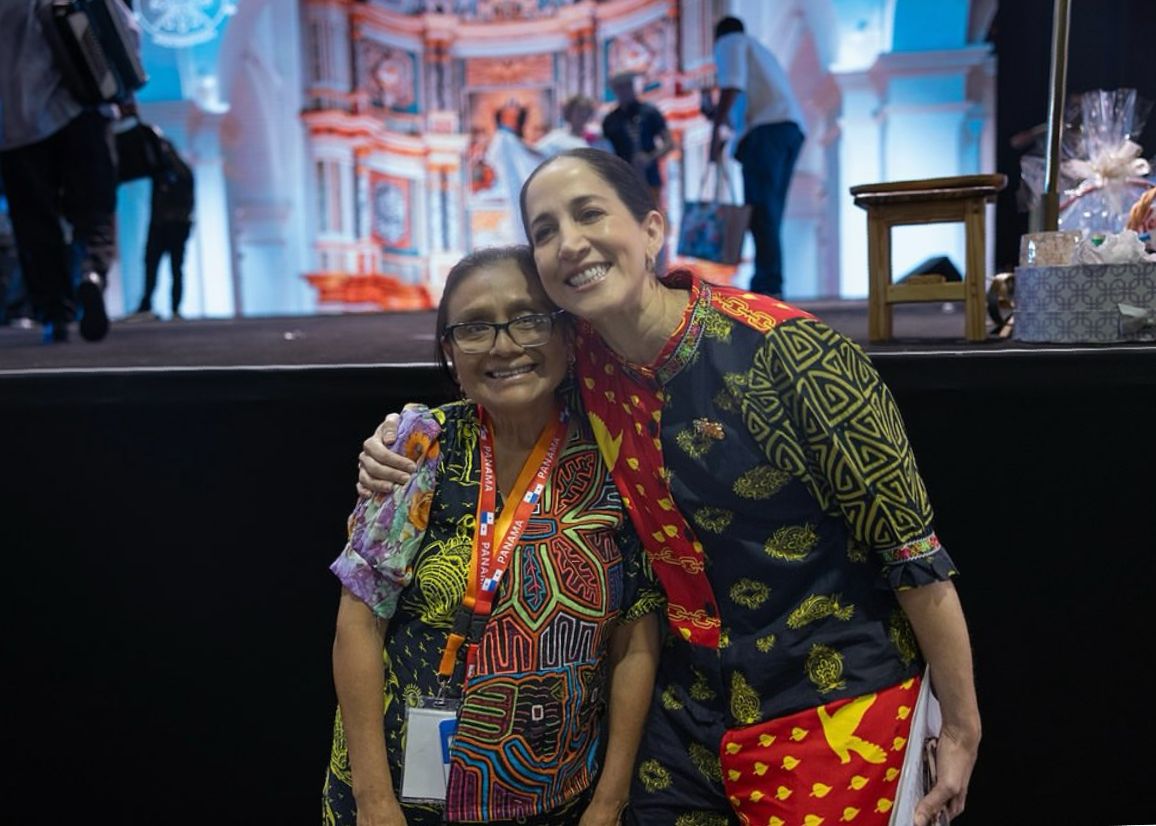
Panama City, August 4, 2025. - The XLV National Crafts Fair was a stage of inclusion, inspiration and resilience, where 15 artisan and family members of people with physical, hearing, intellectual and visual disabilities have shown that art knows no boundaries.
Overall, these creators of inclusive talent achieved sales by B /. 40,000 pits, an accomplishment that reflects both the economic value of their jobs and the social impact of a fair that challenges inclusion.
His proposals, loaded with creativity and tradition, included canvas paintings, decorative paintings, wood carvings, tissues, textiles, jewelry, crafts, balconies and belens, motils, chaquires, shivering, traditional hats, recycled pieces, bags and typical ornaments.
These pieces have not only conquered the public but have also become a display to visualize their talent and strengthen their production projects.
The most outstanding stories were that of Titus Combe, a textile creator with a physical disability, and the traditional preparations of Hat Mendoza and the proposal by Luis Ortiz made to Blind, specialized in jewelry, who, despite his visual disability, thanked God for his gift and invited families to participate and support his artisan.
Indira's talent with hearing impairment also shone with projects such as Indy Trembeques, dedicated to the production of shivering, and Allan Ulyses Cedeño, master of wood carving. Other names that added color and creativity were Daniel's Paintings, David Rijo and Lourdes Crafts, with pictoric and decorative pieces that fascinated the visitors.
Also families of persons with disabilities have been added to this inclusion sample with proposals such as Aceviv Online ALUIF (tissues, jewelry and carved) and JADIS Foundation, that have been highlighted for its recycling crafts.
A typical and inclusive set of people with disabilities, such as JADIS and I'm Capaz, participated in the artistic tidal stage during fair days.
The event was also the stage for the presentation of the Cultural Accessibility Guide at the MiCultura pavilion. Also, the fair had interpreters and specialized support from SENADIS, IPHE and MITREL, guaranteeing accessibility throughout all activities.