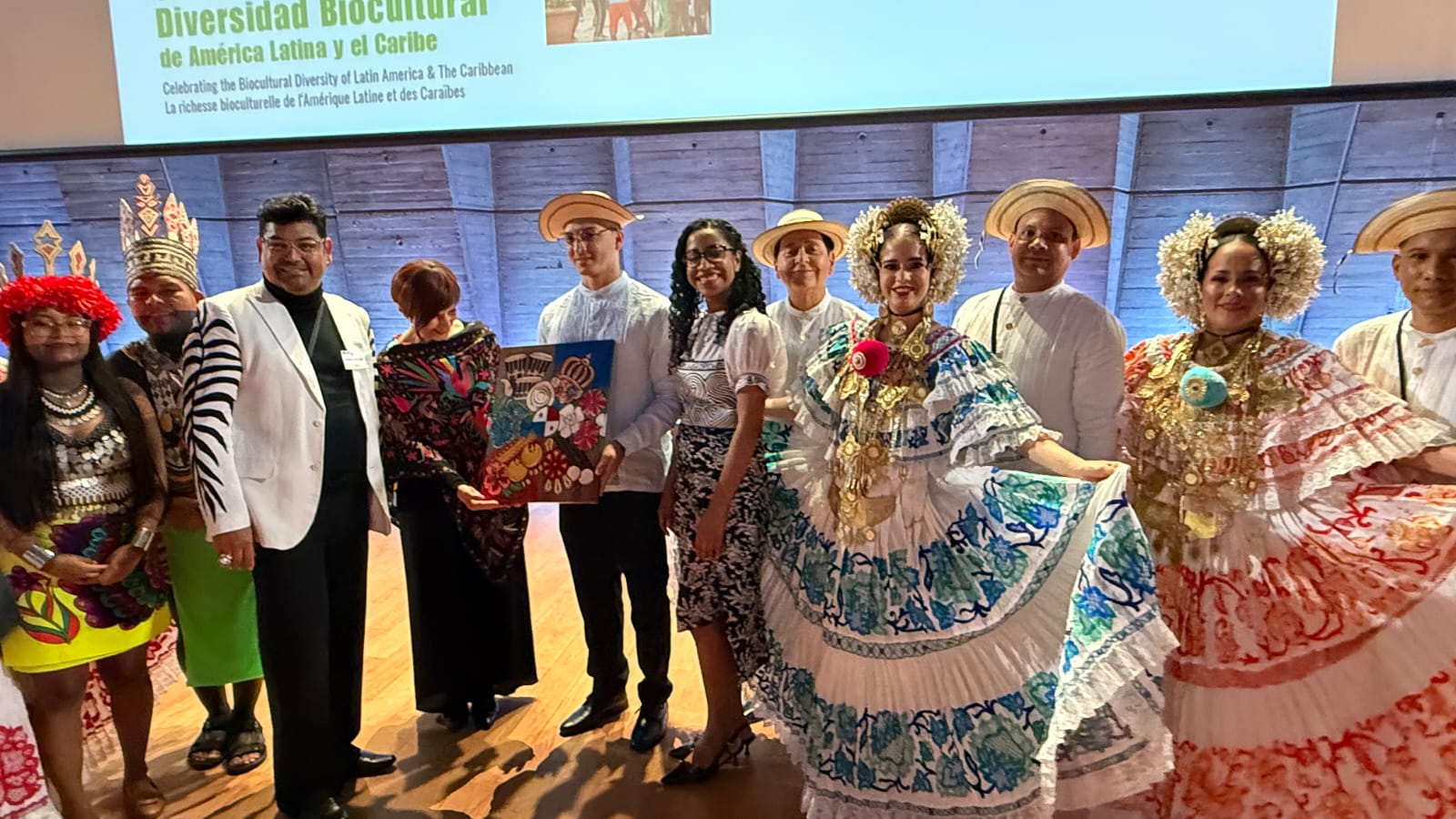
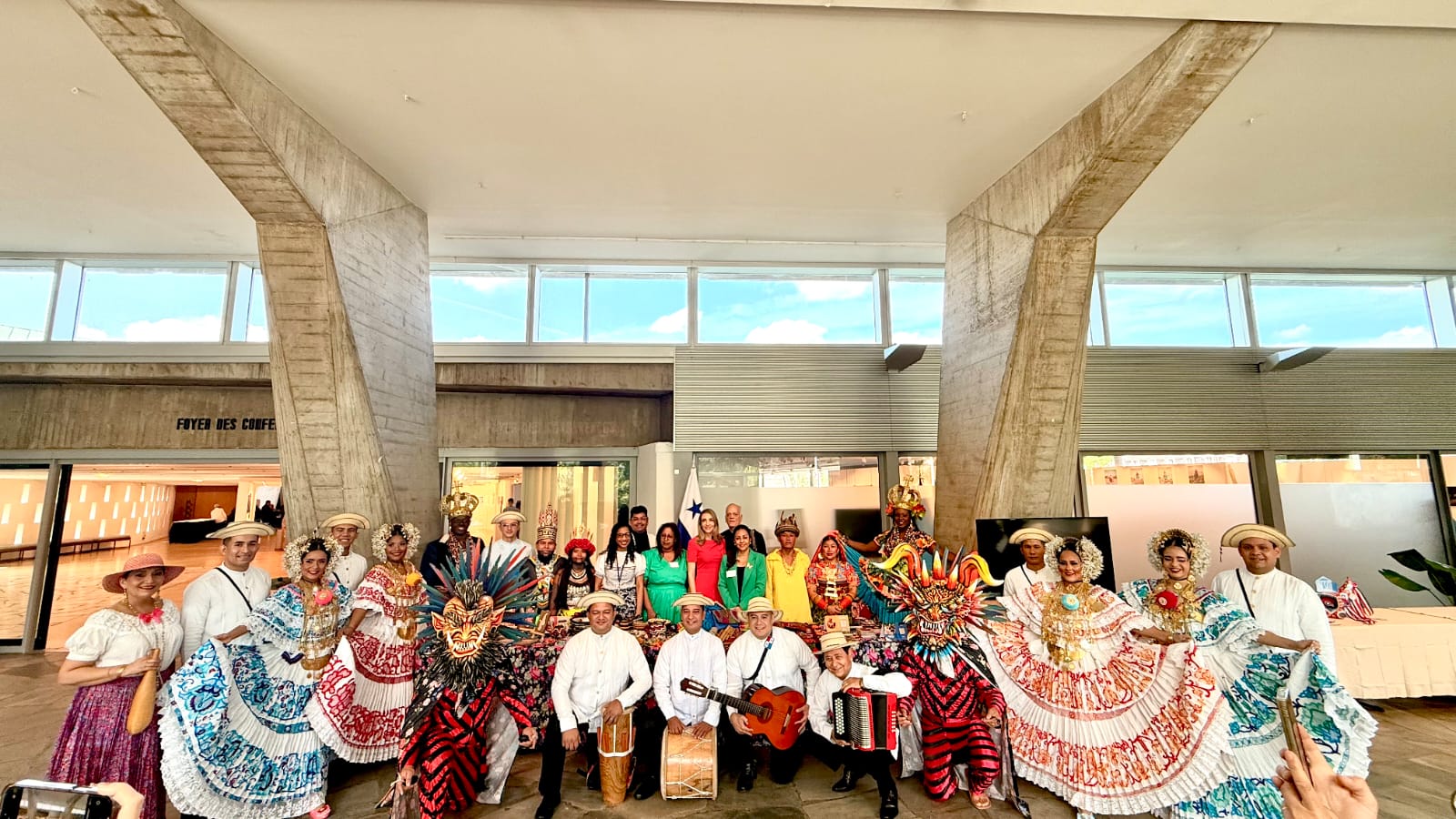
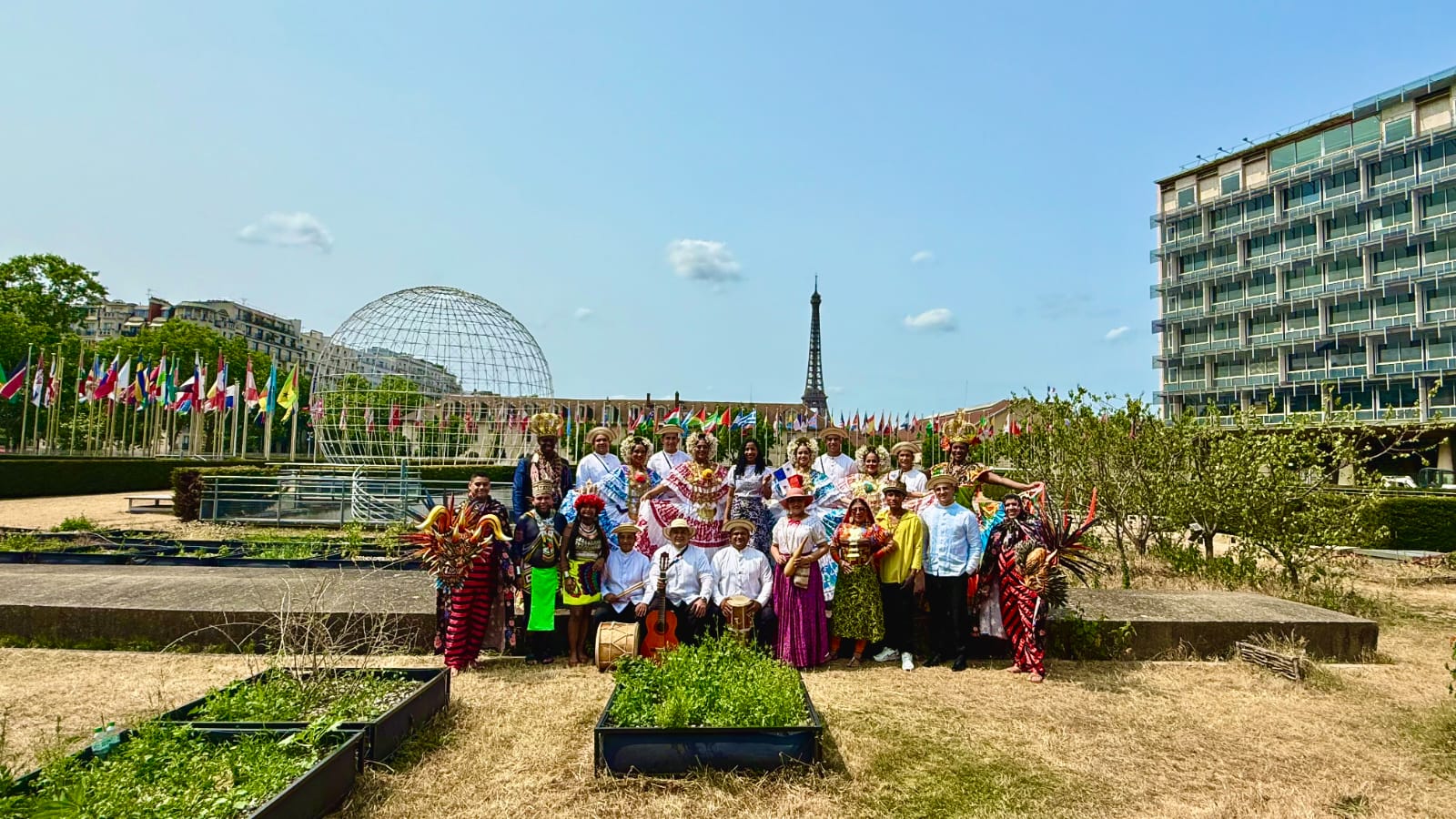
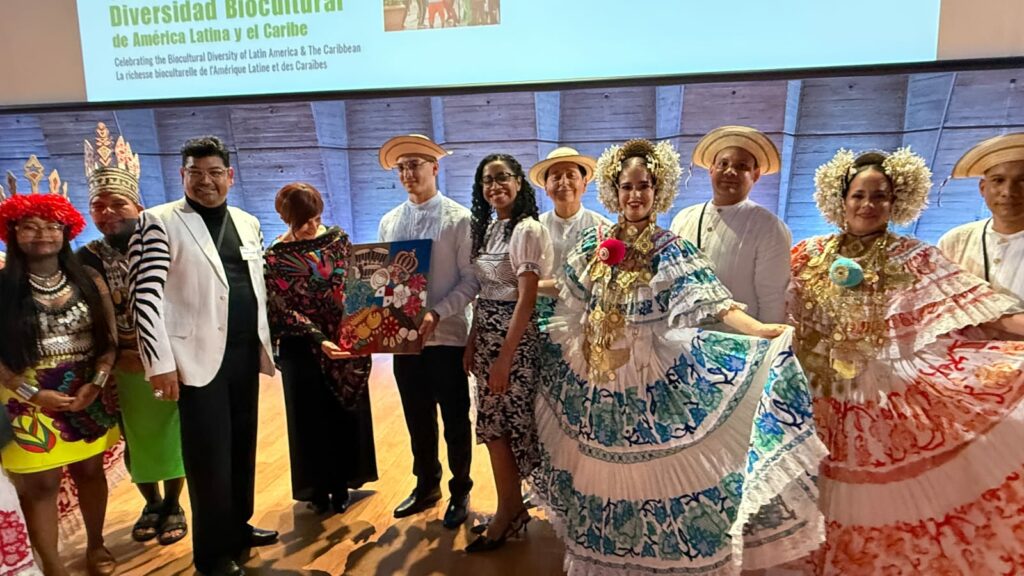
Panama's Latin American and Caribbean Week at UNESCO, under the motto "Viva Roots of Biological Diversity," presented a representative sample of its native cultures, Afro-descendants and mestizo. The presentation highlighted the profound connection between our natural and cultural heritage, both in our landscapes and biodiversity and in our peoples, rhythms and colors.
The public, made up of high officials of the UNESCO, delegations, academics, students and other guests, rejoiced with dances that evoke the jungle and rivers, interpreted by representatives of the peoples Emberá and Guna, guardians of ancestral knowledge deeply linked to trees, waters and earth.
Cultural expressions of African descent, such as the force of the congo and the dirty diablicos, born at mangroves and coasts, have been put forward and reflect a living legacy of resistance, freedom and pride.
Finally, the elegance of the typical Panamanian suit, the pollera with its shivering as well as the nightsittings and the pint 'o hat, transport the assistants to the life of the countryside with its flowers, embroidery and high ground music, where tradition intertwines with nature.
Biodiversity is the vital fabric of our planet. To protect and safeguard both cultural and natural heritage and to support dynamic creativity and cultural sectors is crucial to face challenges today: climate change, inequality, the digital divide and growing conflicts.
The Permanent Delegation of Panama to the UNESCO thanked the Ministry of Culture for its commitment and collaboration, which made possible this meaningful representation of our living identity, culture and roots that nourish and sustain our biodiversity.