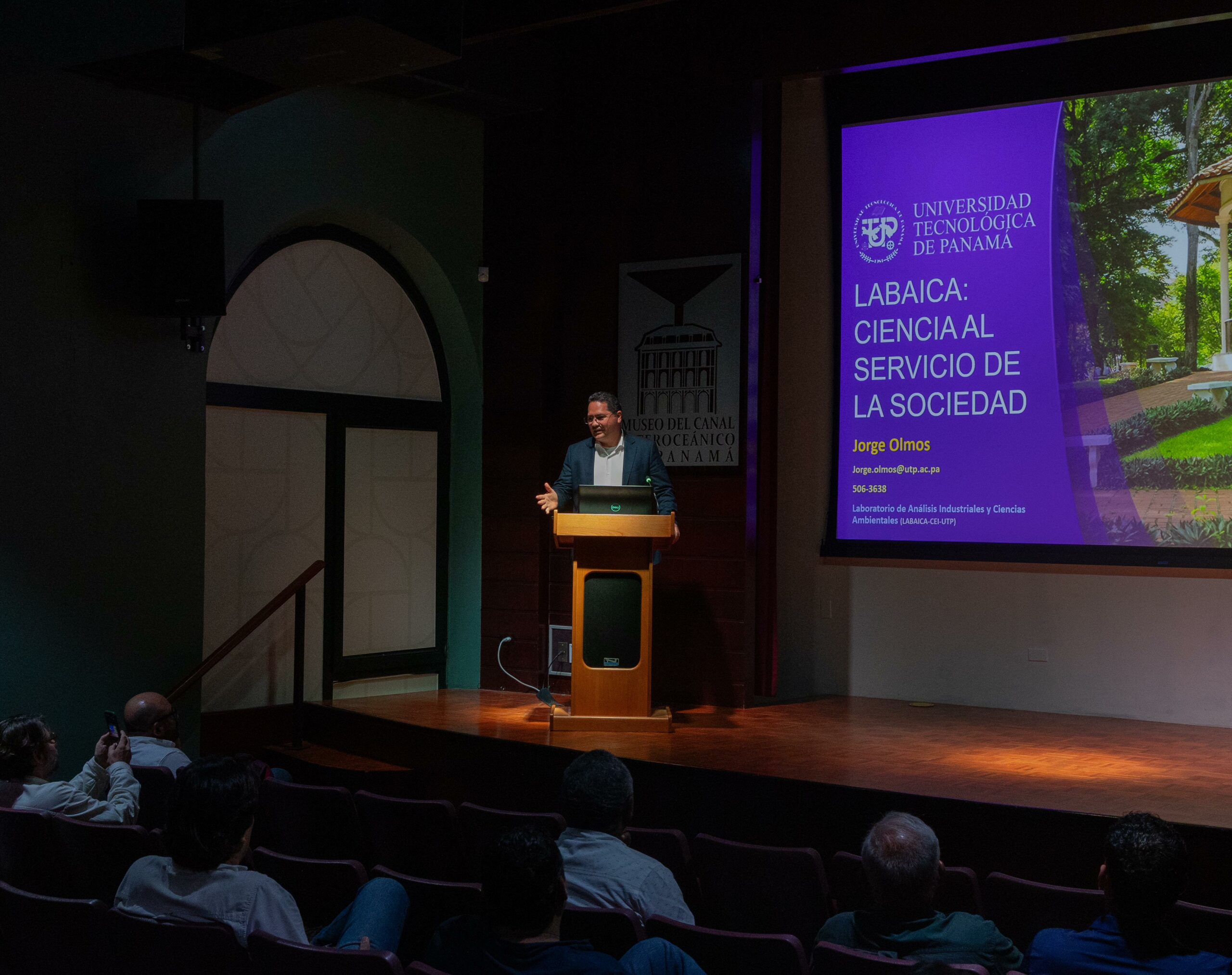
Panama, 6 May 2025 - The Panama Canal Museum Auditorium was the stage of the International Workshop Archaemetry and Heritage, an interdisciplinary meeting that brought together students, researchers and archaeologists with the aim of exploring the links between scientific techniques and the study of the past
Juan Guillermo Martín, director of the Center for Historical, Anthropological and Cultural Research (CIHAC AIP), noted that this seminar aims to lay the technical and scientific bases for the study and maintenance of the archaeological collections of the Republic of Panama.
He added that "the event forms part of a number of great future projects advanced by the Ministry of Culture, including the expected reopening of the Reina Torres de Araúz Anthropological Museum, the creation of the Richard Cooke National Conservation Centre and the future inventory of the Panamanian Caribbean's underwater cultural heritage."
Martin emphasized that archaeometry is a set of physical and chemical methods and technologies that allow for evaluating archaeological materials, identifying raw materials sources, drawing commercial routes, studying technical production processes - both preHispanic and colonial - and making informed decisions for the conservation of these cultural goods.
During the seminar, researchers from universities from Spain, Colombia and Panama submitted studies about military structures from the 16th, 17th and 18th centuries, showing how archeometric analysis has contributed to the development of international networks for restoration and heritage conservation.
The themes discussed included: Labaica: Science at the service of society; The Laboratory of Studies of Arts and Heritage in the scientific studies of the material heritage of Colombia; Archeology of architecture and fortified heritage; the case of Cartagena de Indias, Colombia; Historical and Archeology: Ceramic study using non-destructive techniques and multidisciplinary approaches and Panamanian Creole ceramics: an initial Archeometric vision.
That seminar was built up as an important space for knowledge exchange, international cooperation and strengthening scientific research applied to the conservation of Panama's heritage. That development was a milestone in efforts to protect, restore and enhance Panama's cultural legacy for future generations.