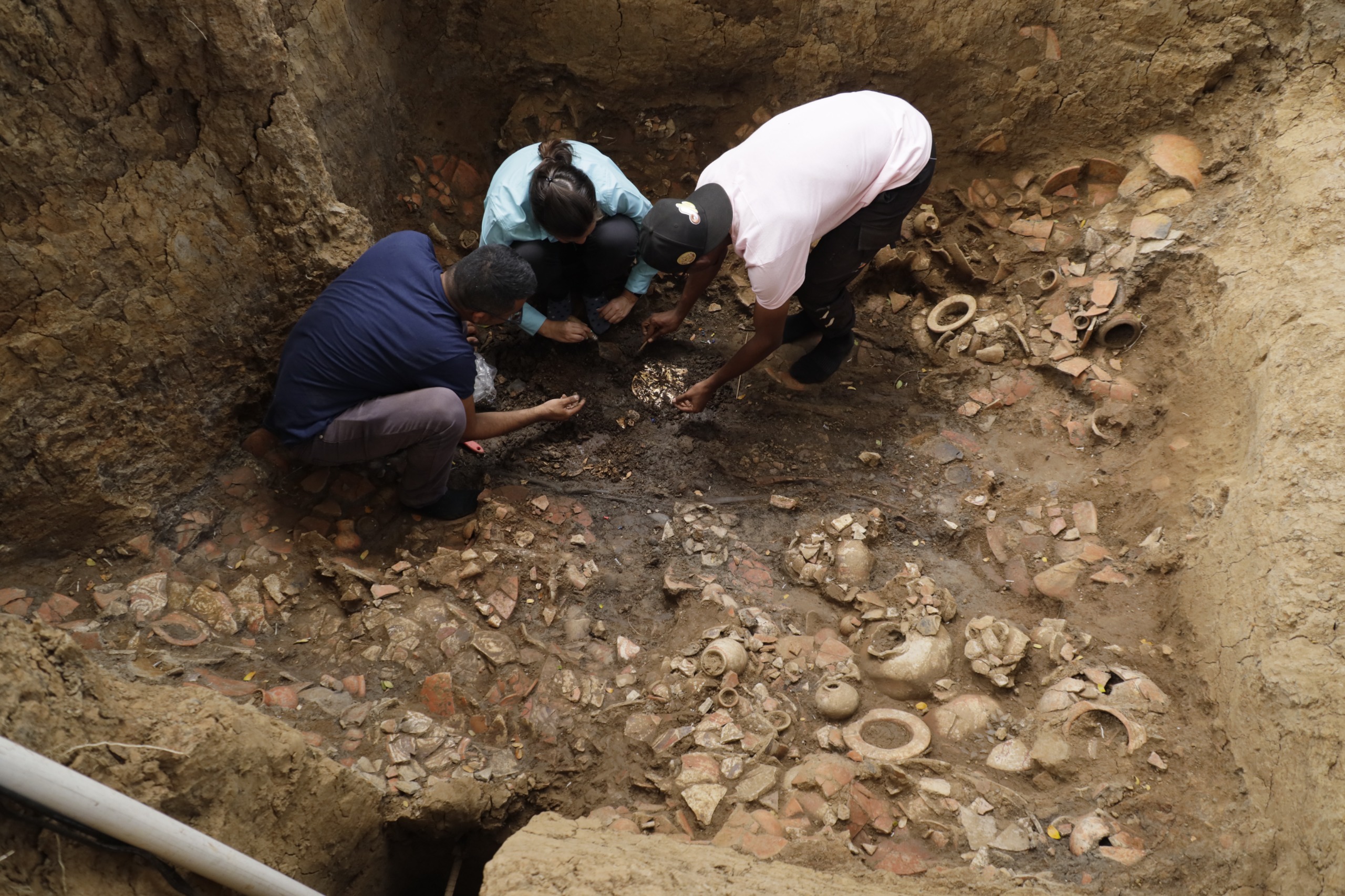
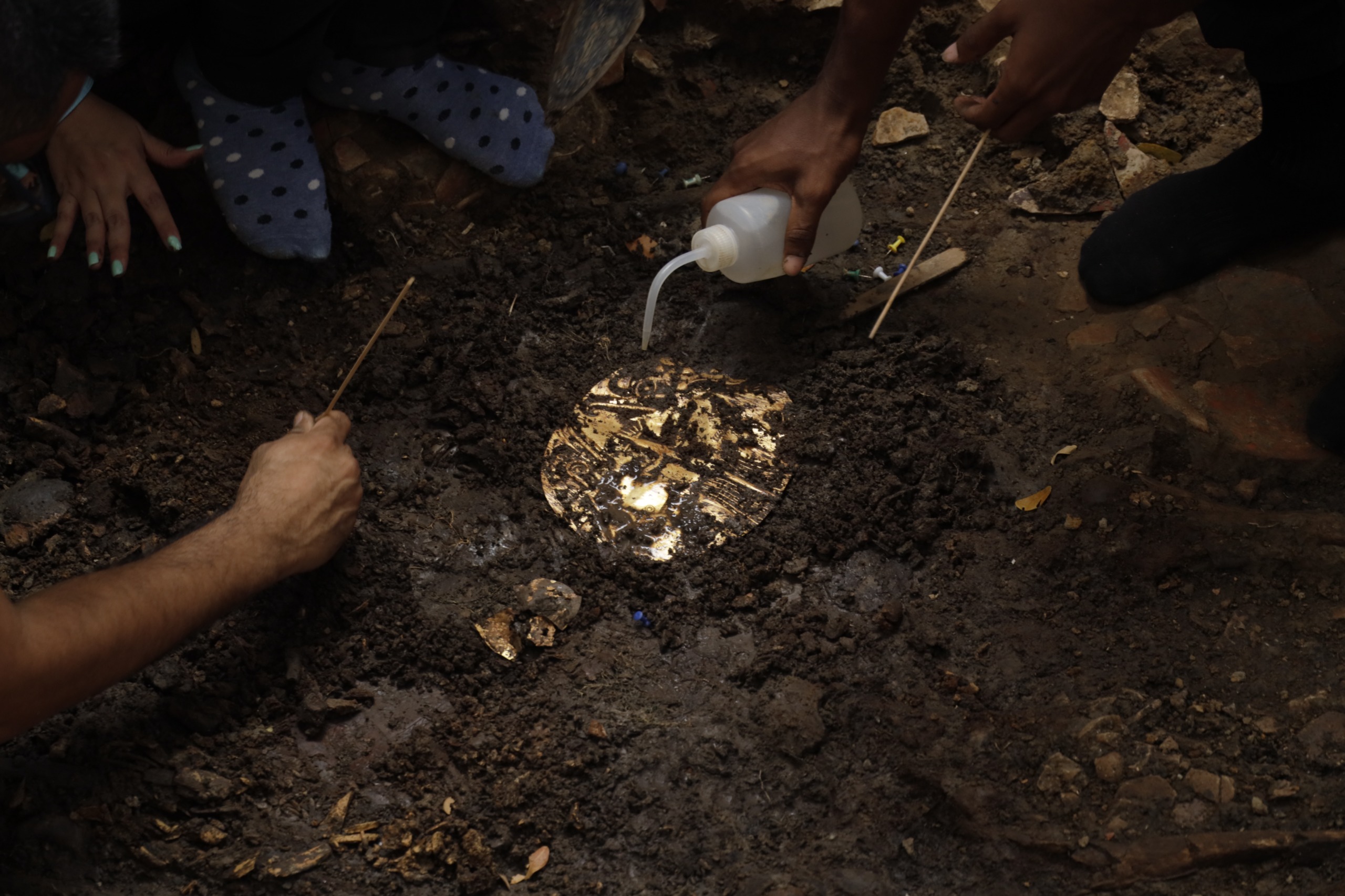
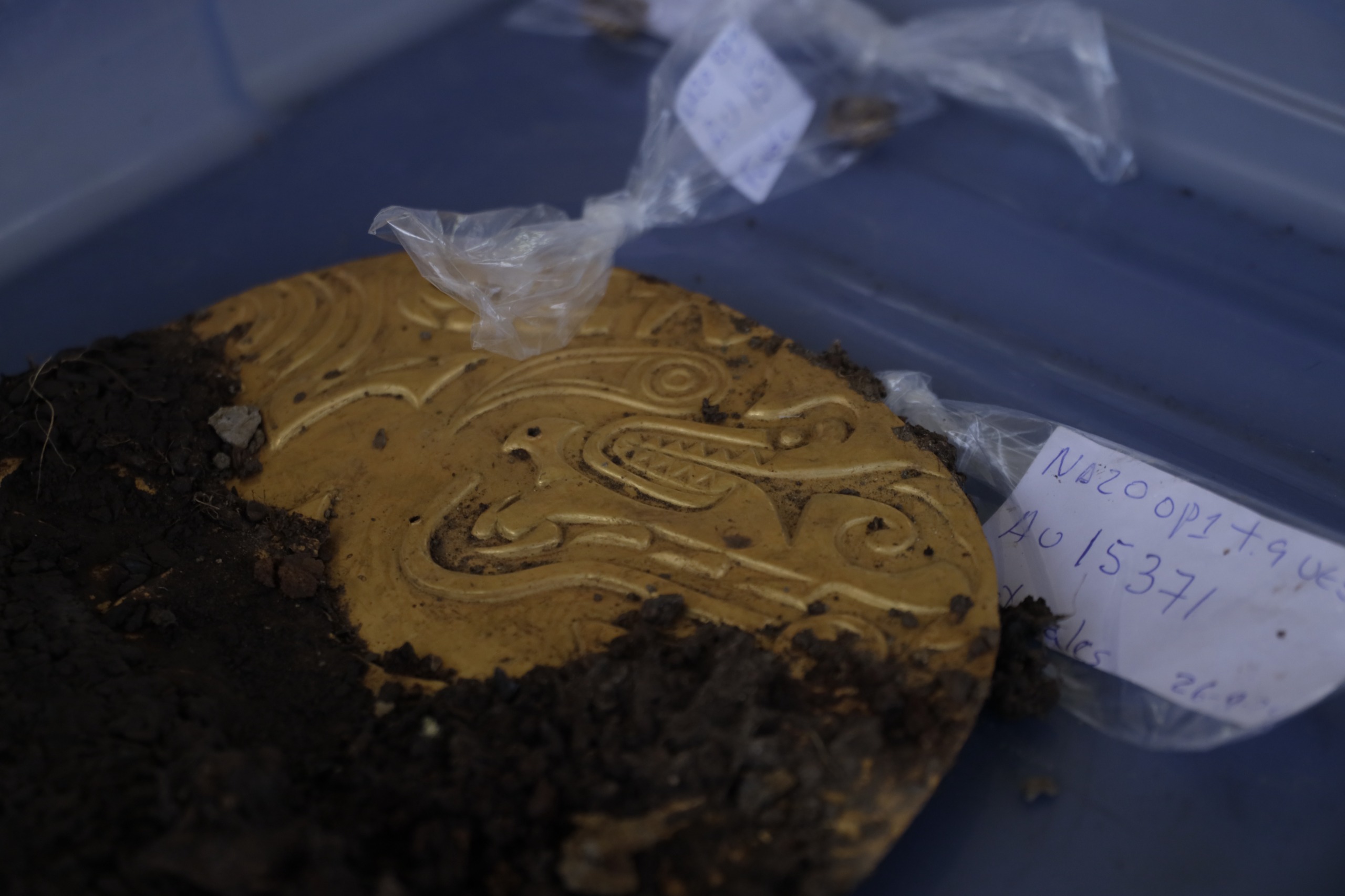
The tomb of an important Mr. Coclé (750-800 AD), a pre-Hispanic age, was found at the Archeological Park of El Caño, Nata District Province of Coclé.
Linette Montenegro, national director of heritage of the Ministry of Culture (MiCultura) detailed that during this summer the Foundation El Caño and the Ministry have been developing the archaeological project of Tucba N ° 9 of the National Archaeological Park.
It's part of a long term project that started at the dry season of 2022 and is financed through Cultural Cooperation Convention No. 025-2021 concluded between the Ministry of Culture and the El Caño Foundation for the development of the "El Caño Archaeological Project, campaigns 2021-2024.
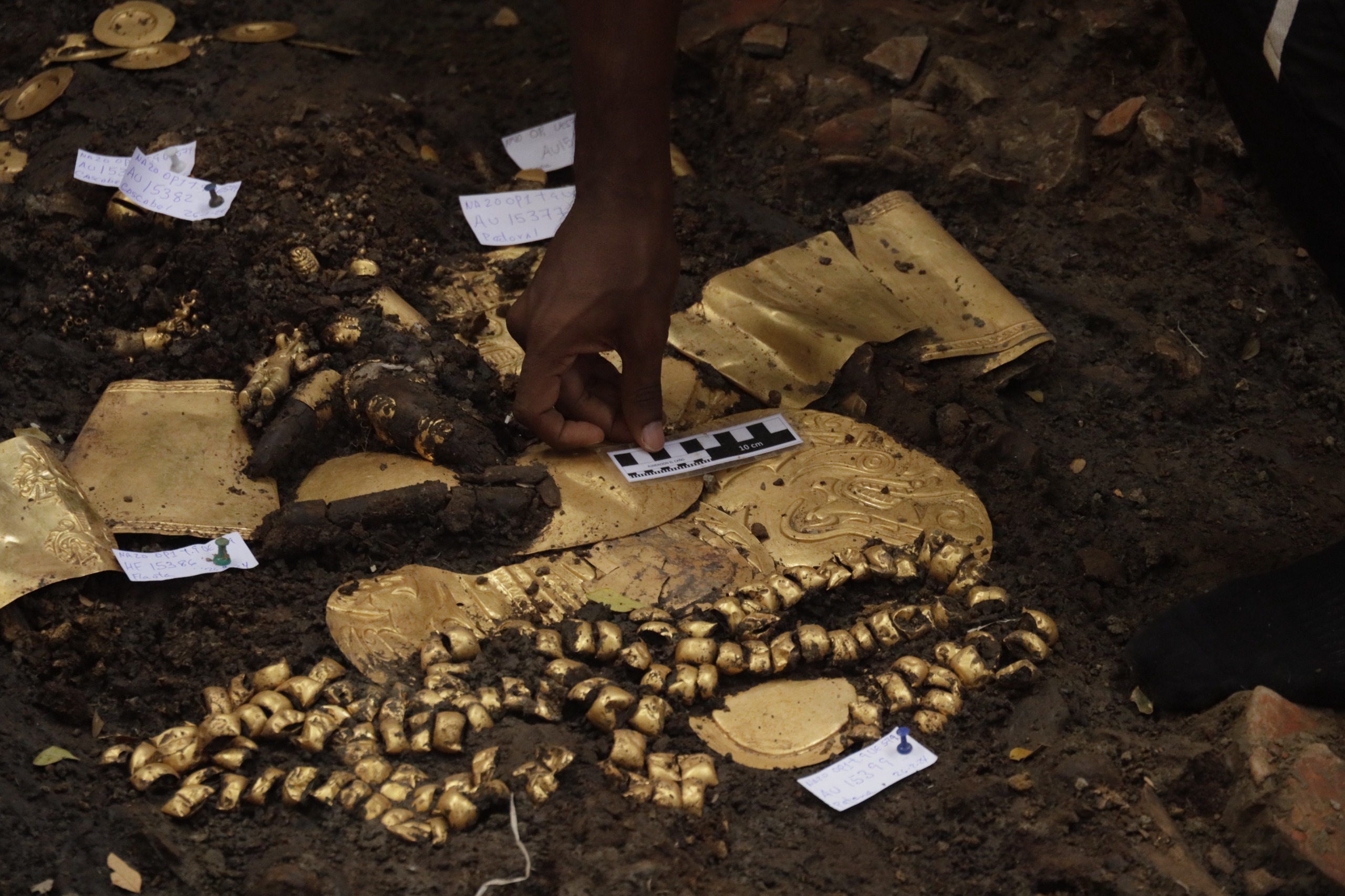
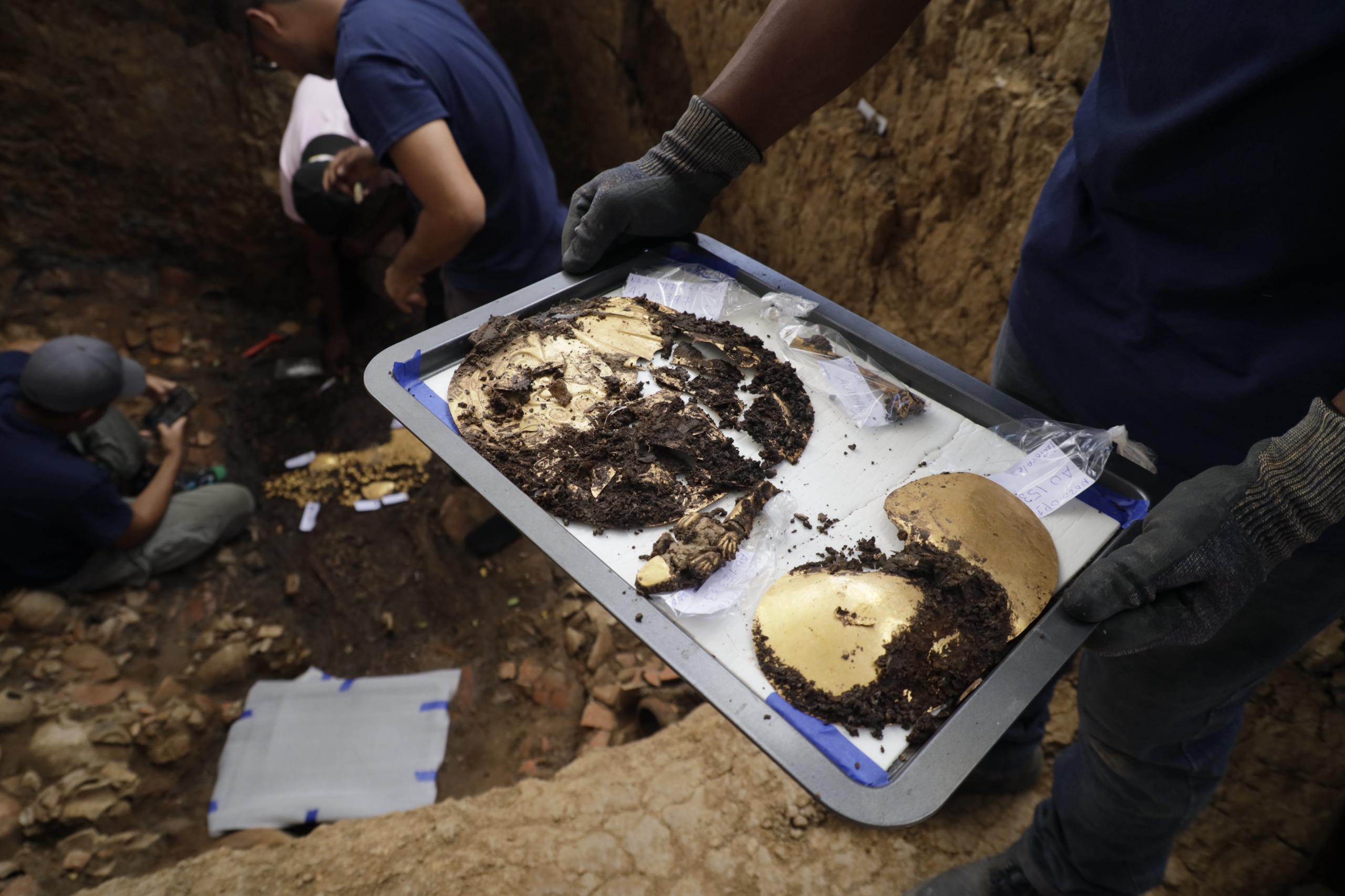
Montenegro added that as well as the offerings, most of them ceramic artifacts, they also found pieces of gold that are part of the funeral awnings with which the dead were buried and have an economic value and an incalculable historic and cultural value.
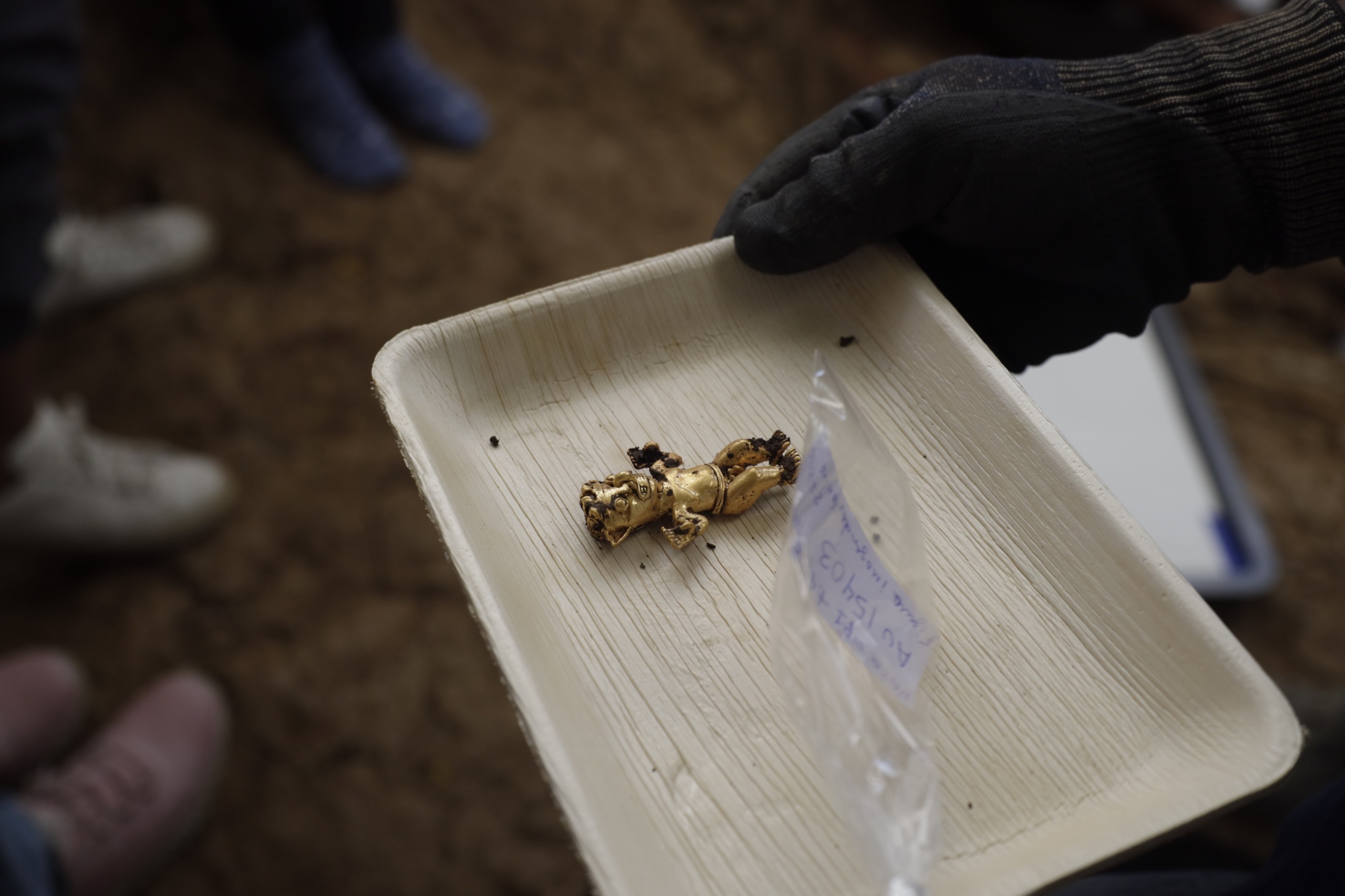
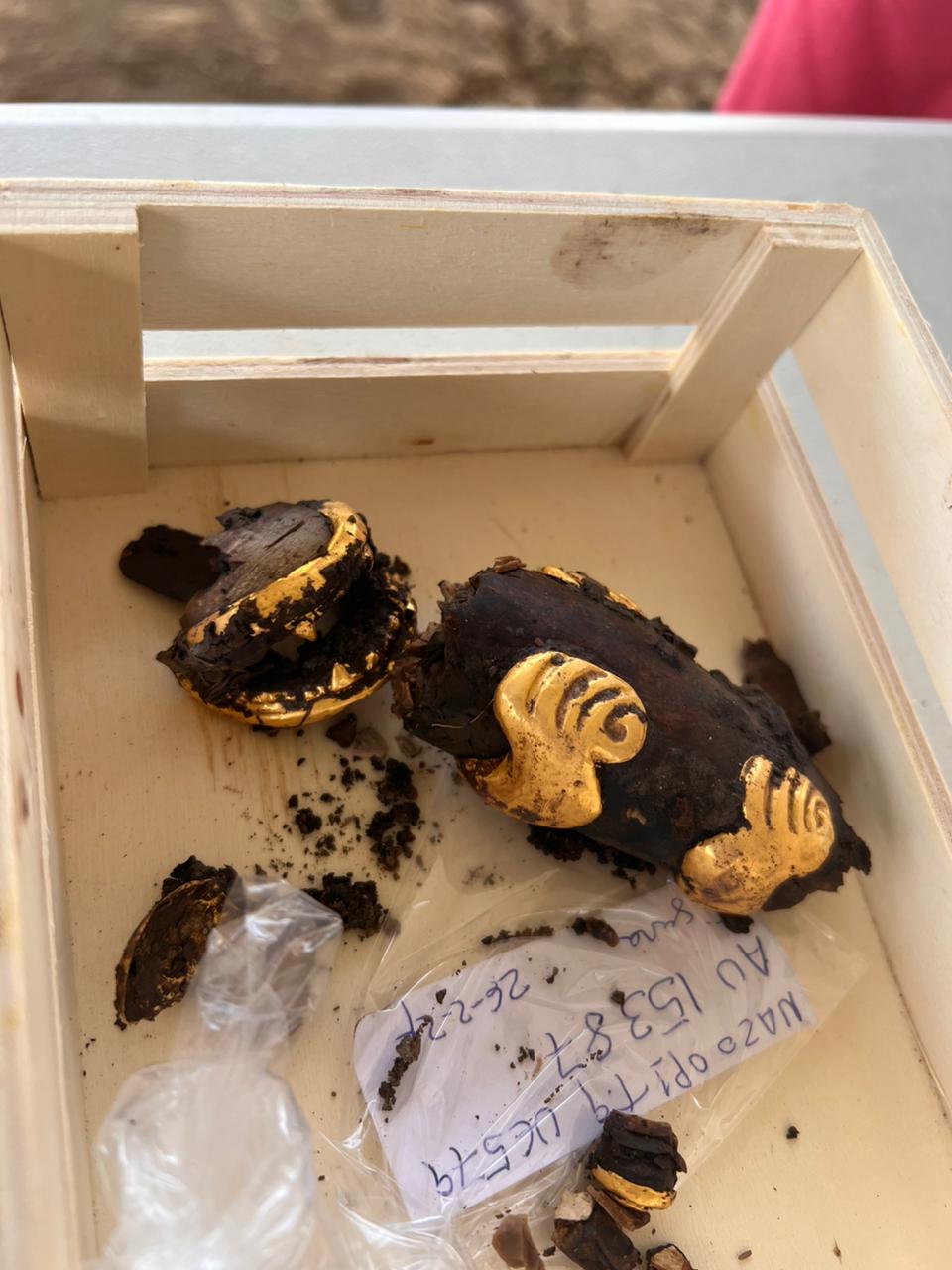
The jug includes 5 pectorals, 2 spherical gold beaded seatbelts, 4 bracelets, 2 human figure earrings (a man and a woman), a clattering with a doped crocodile, 1 circular small beads necklace, 5 patelote teeth with gold cuffs, a set of circular gold plates, two matchels, bracelets and pallelín with dog teeth and a set of bone flutes.
While Dr. Julia Mayo, director of the El Caño Foundation and director of an archaeological project for 18 years, as excavations began in 2008, she detailed that this collection may have belonged to a high status adult male from the headquarters of Rio Grande.
Dr. Mayo stated that the grave was built about 750 after Christ and was that of a great lord but also of other people who died to accompany him to "beyond."
He explained that the excavation of the funeral has not been completed, so we cannot currently specify how many people have been buried with it but what we know was buried face down, a common form of burial in this society, about a woman's body.
Located El Caño was a funeral resort (necropolis or town of dead), built about 700 AD and abandoned around 1000 AD. Besides the well-known monolith, the enclosure contained a cemetery and a ceremonial area with wooden buildings.
That discovery is important, among other things, because it presents a very special type of burial that we "know as multiple and simultaneous burnments and we call it so because they consist of immumations of a variable number of people (about 8 to 32 people) in a same grave of high status people who were buried with other previously sacrificed to serve as accompaniments" remarked specialist Mayo.