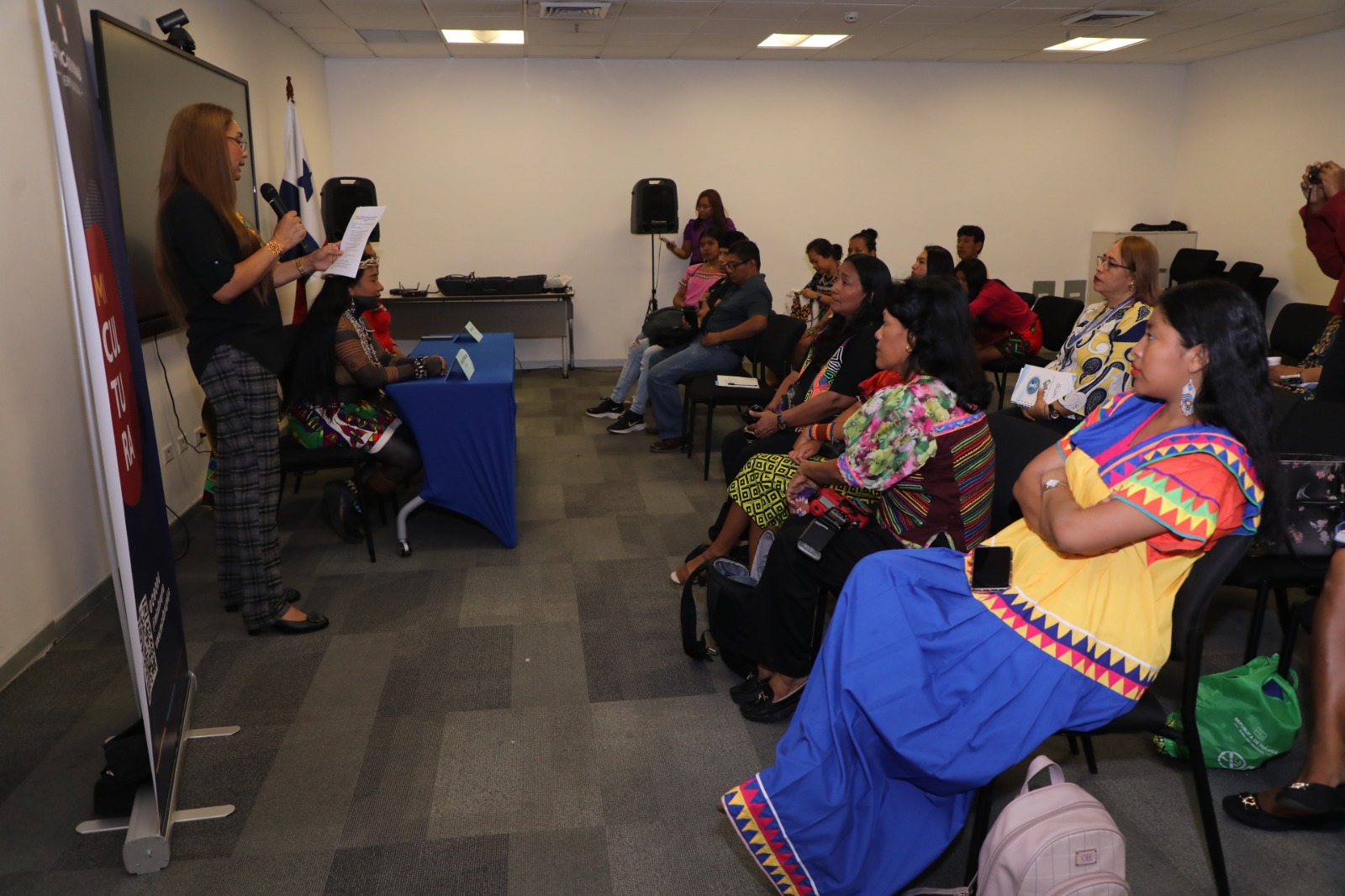
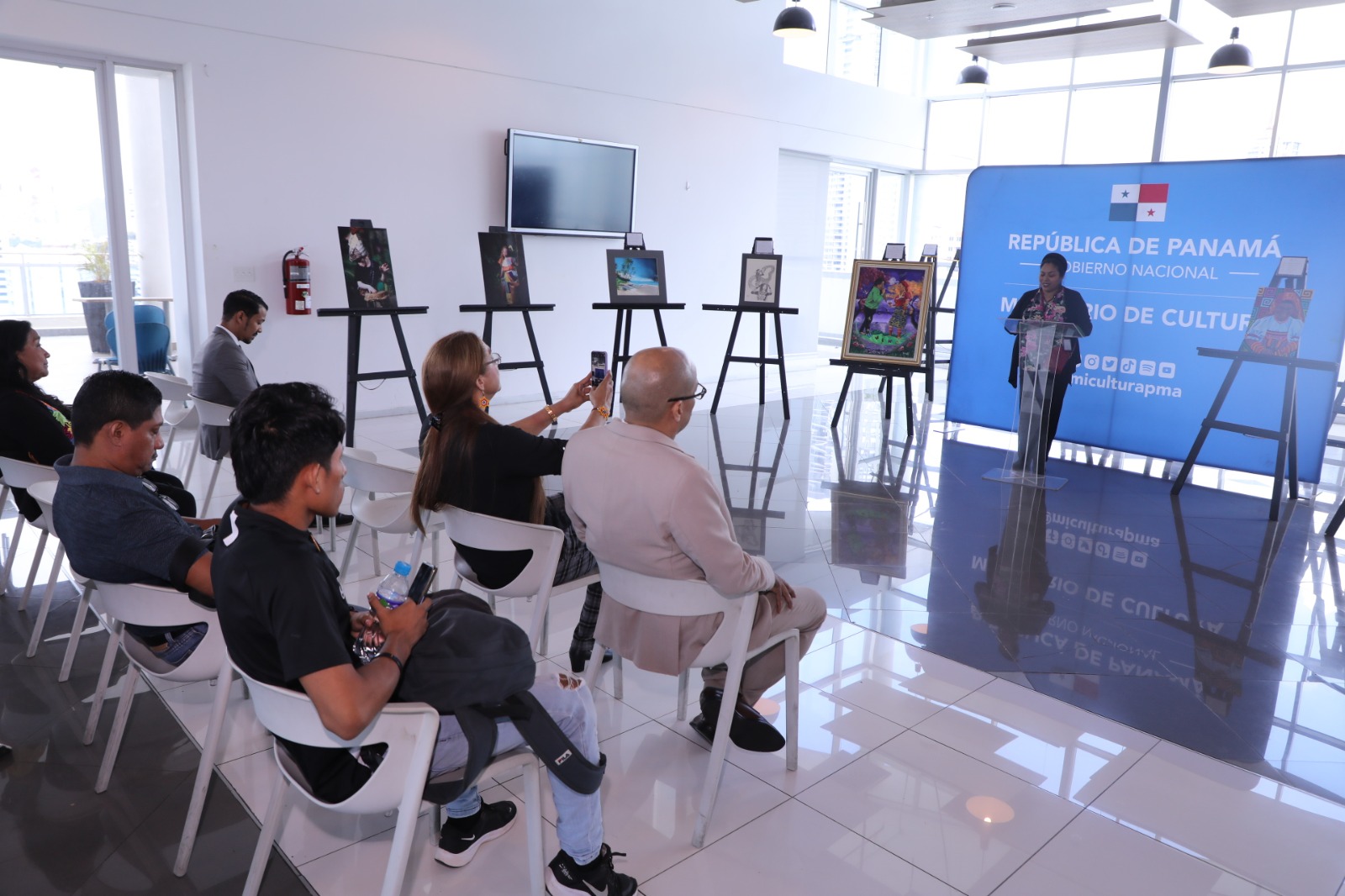
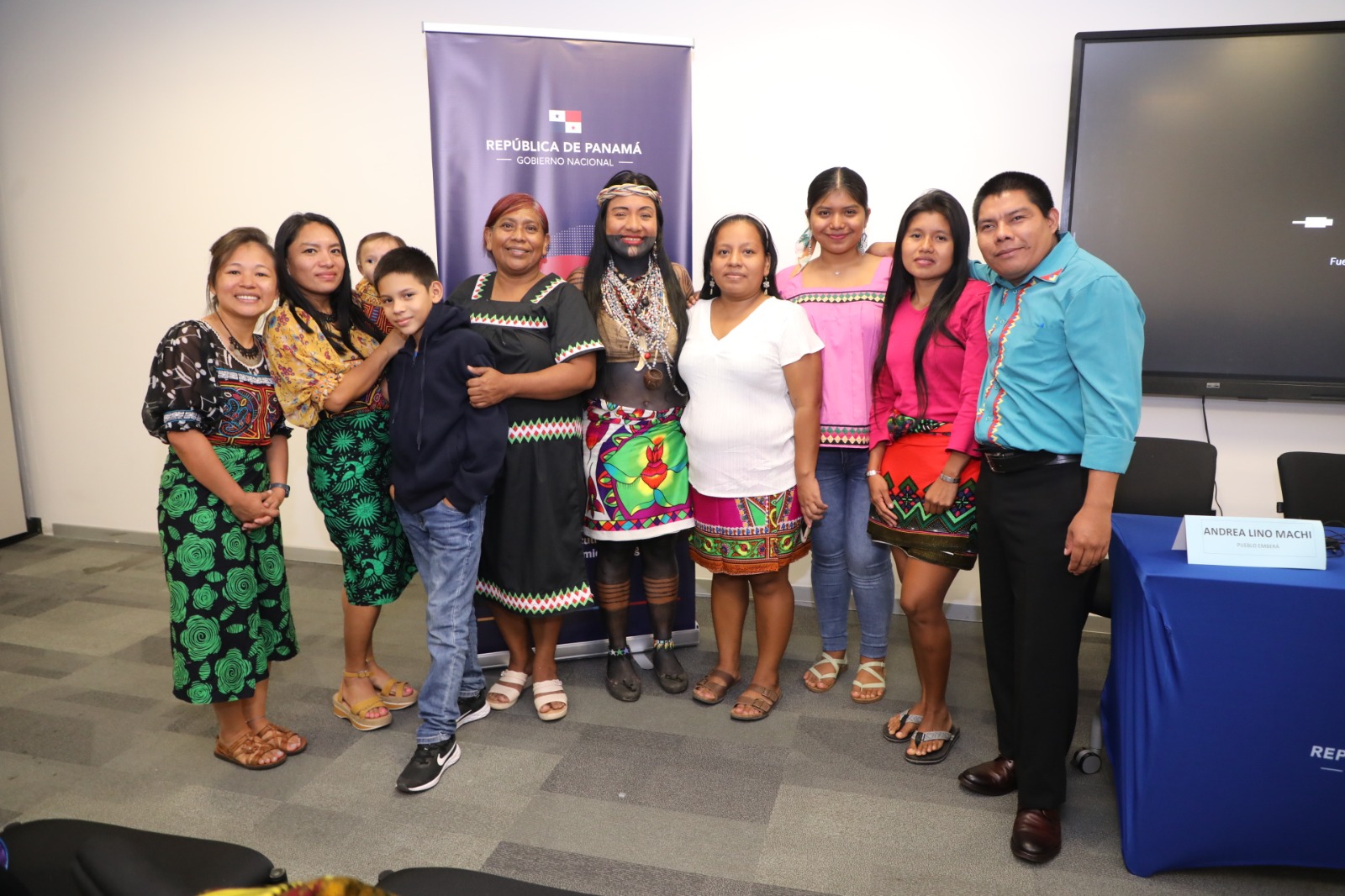
At the International Day of Indigenous Women, today, September 5, the Ministry of Culture (MiCultura) through the National Cultural Rights and Citizenship leadership held an event entitled "The role and challenges of indigenous women with regard to social changes throughout the world and with a transmission of ancestral values and knowledge."
The indigenous representatives, Sonia Henríquez of the Guna people, Mary Acosta, Ngäbe and Andrea Lino of the Emberá people, had an opportunity to discuss issues such as the contribution and visibility of indigenous women, Women as a transmitter of knowledge of culture, economic empowerment, territorial protection and preservation of culture, among other issues that highlight their origins, roots and identity.
Enrique Noel, director of Cultural Rights and Citizenship of MiCultura emphasized the importance of this meeting, noting "that it aims to give an opportunity for indigenous women, to express their ideas and their feel, to raise their voices and to fight intersectional discrimination faced by young, older and disabled indigenous women, and to highlight the experience of women and of the seven indigenous peoples."
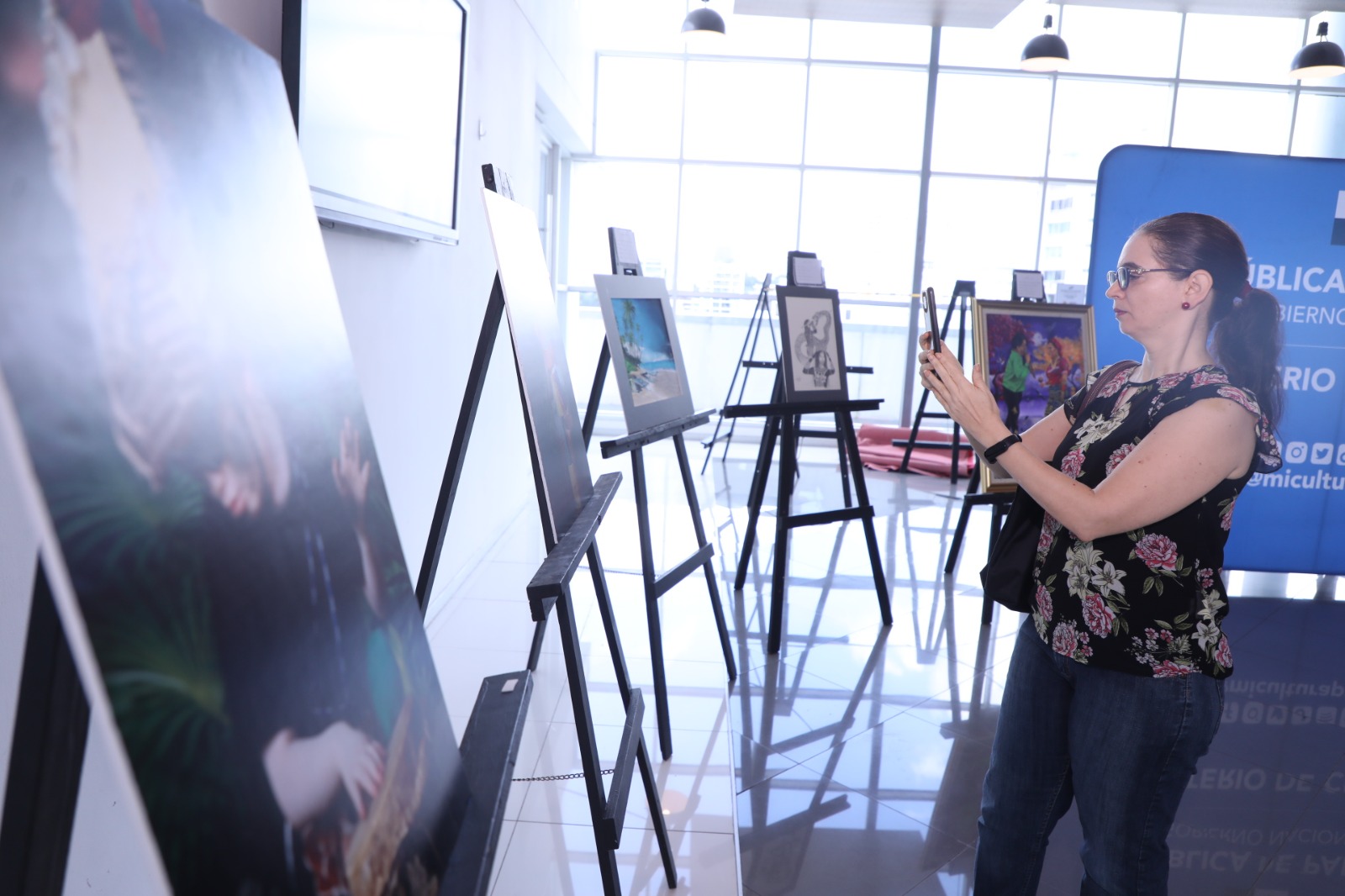
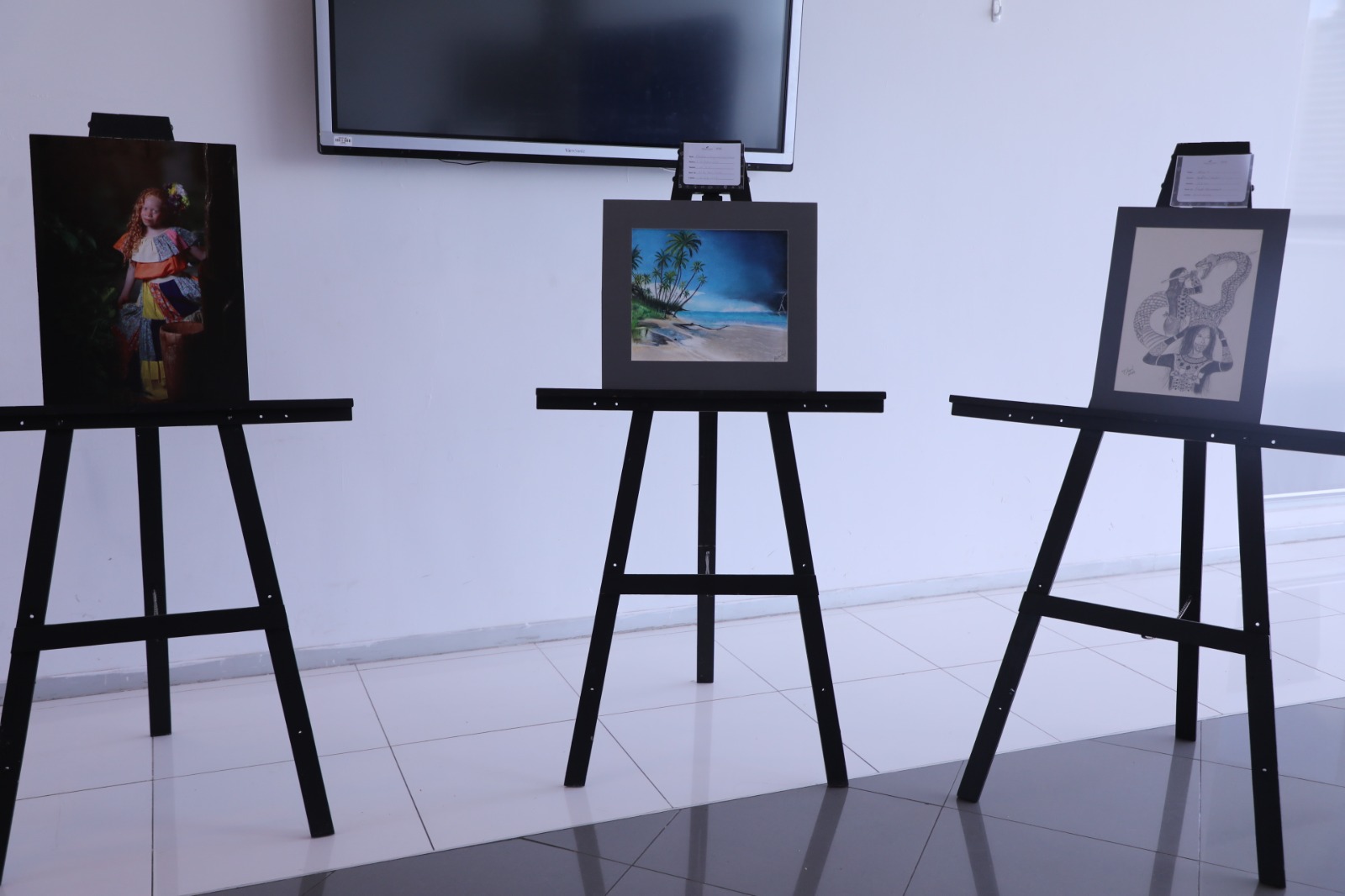
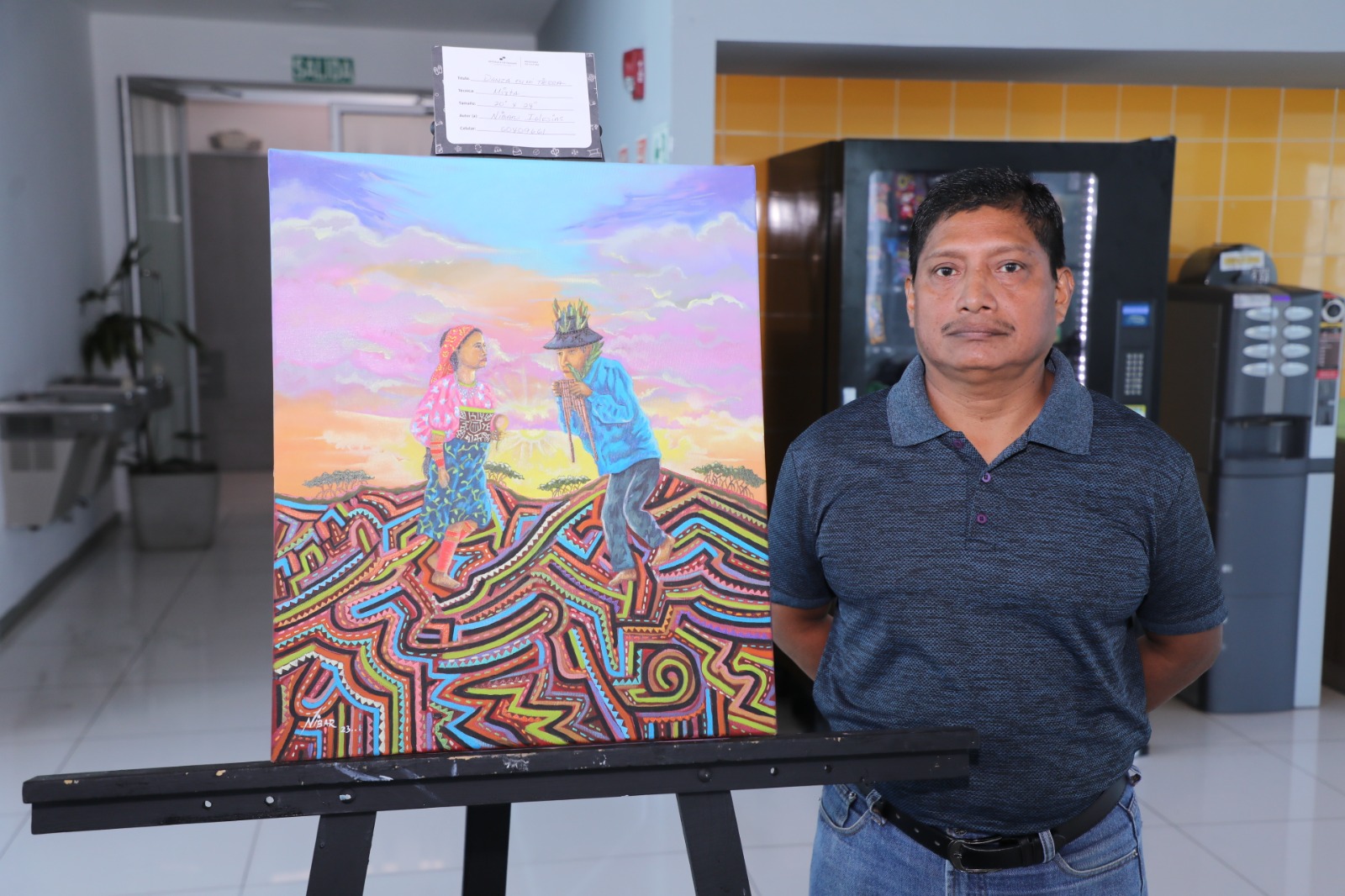
At the end of the event, the collective visual exhibition, "Indigenous artists," was opened and will be open until September 7 at the R floor of the Tula Building in Via España, headquarters of the Ministry of Culture.
That sample of six emerging artists stands out through visual arts, the artistic skills of indigenous youth in different techniques such as drawing, acrylic, photo, black and white composition, light dark and graphite drawing.
Ricaurte González Him, director of the School of Plastic arts, of the Ministry of Education, detailed that "this collective" reflect the cultural identity of an indigenous group, its culture, its experiences and its expression, and that they are motivated by their experiences with the characteristic of highlighting national culture. "
That activity forms part of the program for the promotion and strengthening of the original peoples that conduct the conduct of Cultural Rights and Citizenship at MiCultura.