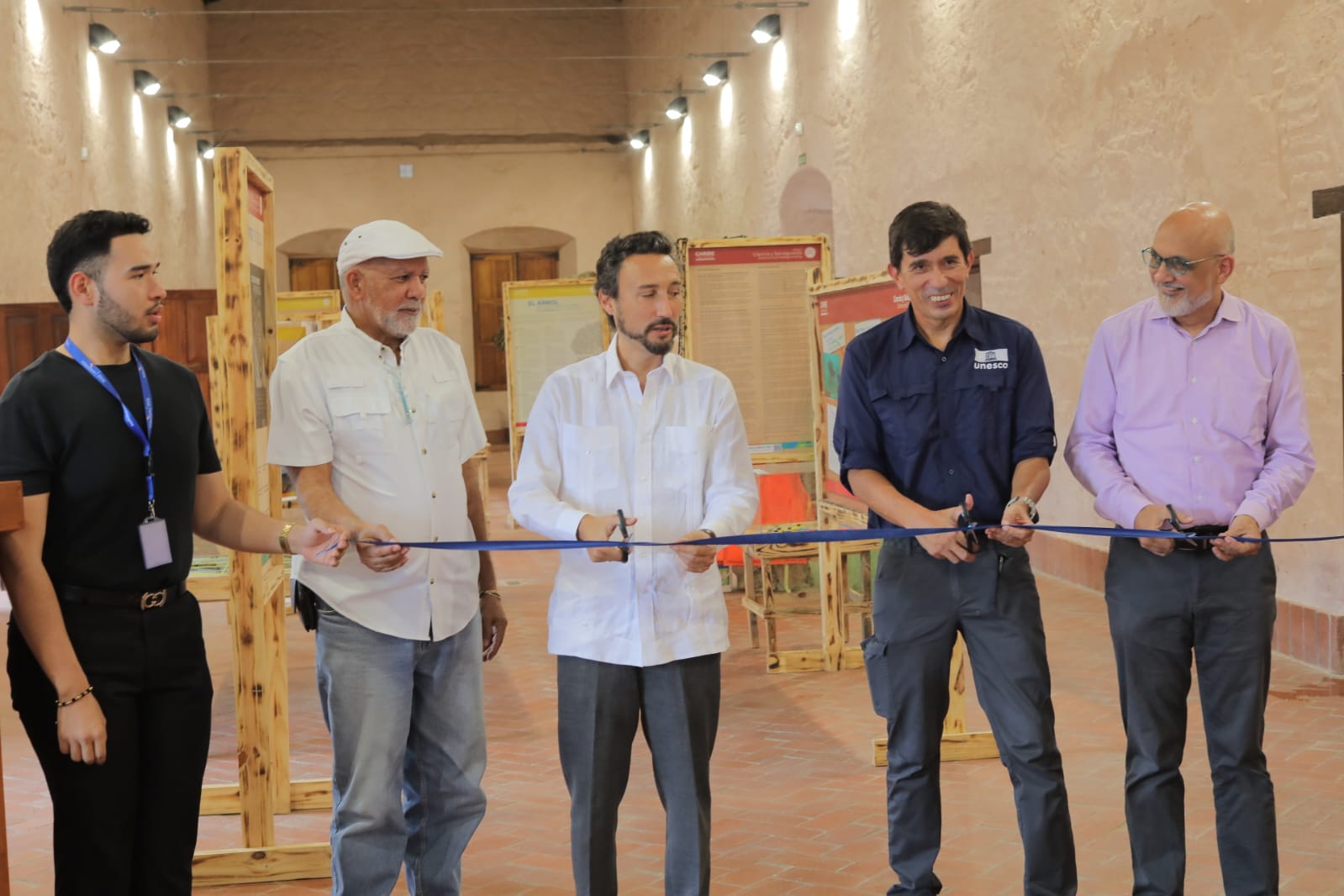
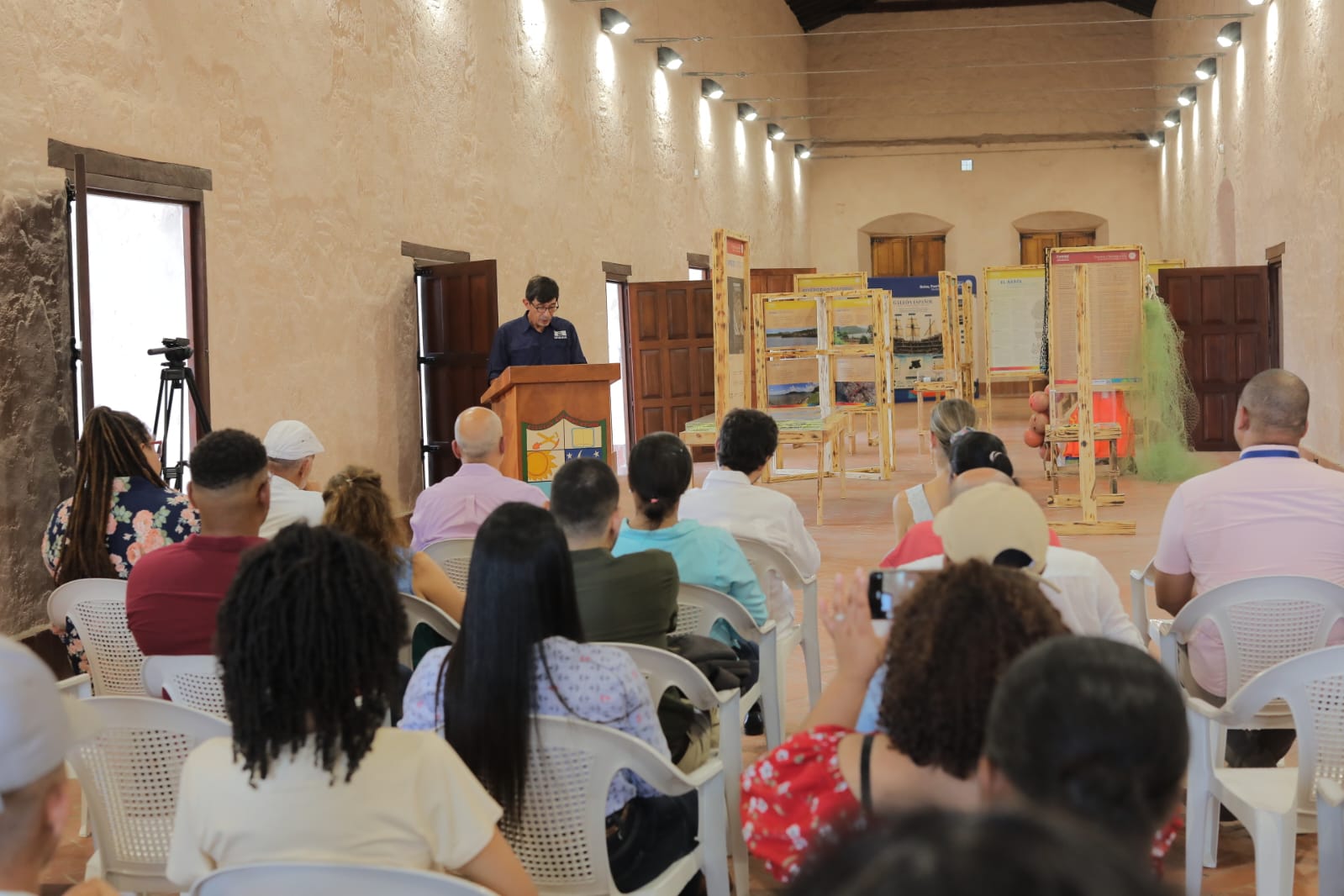
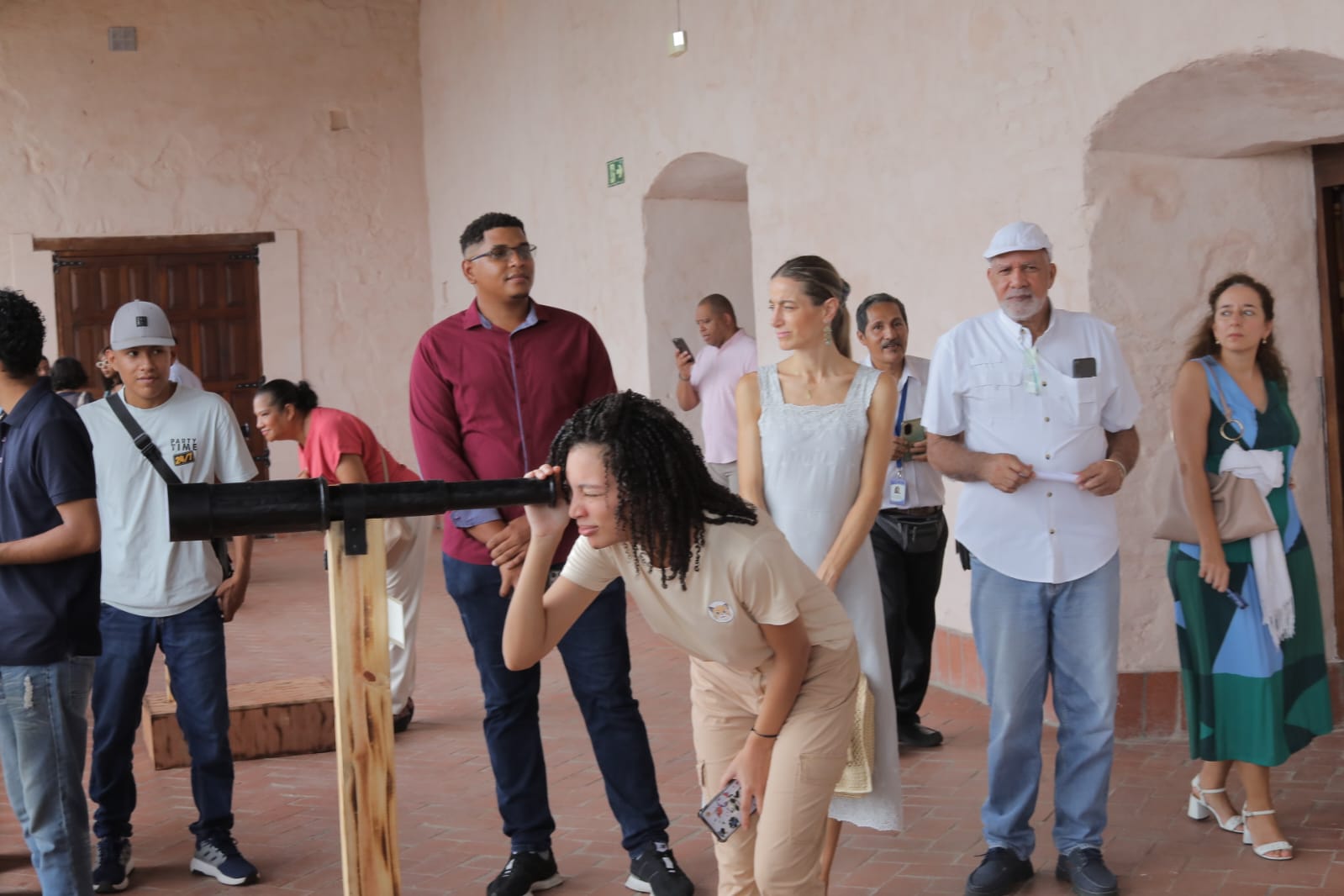
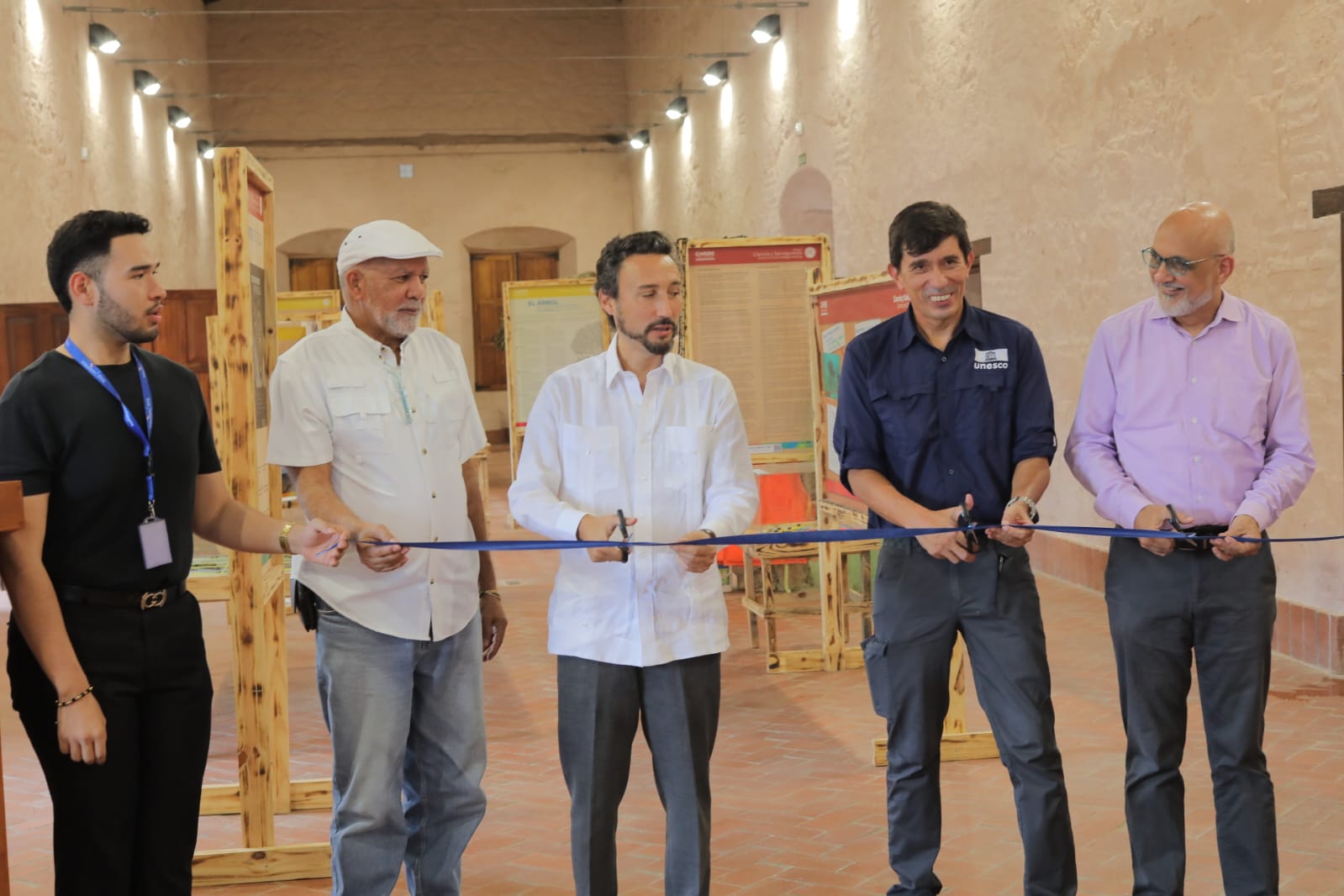
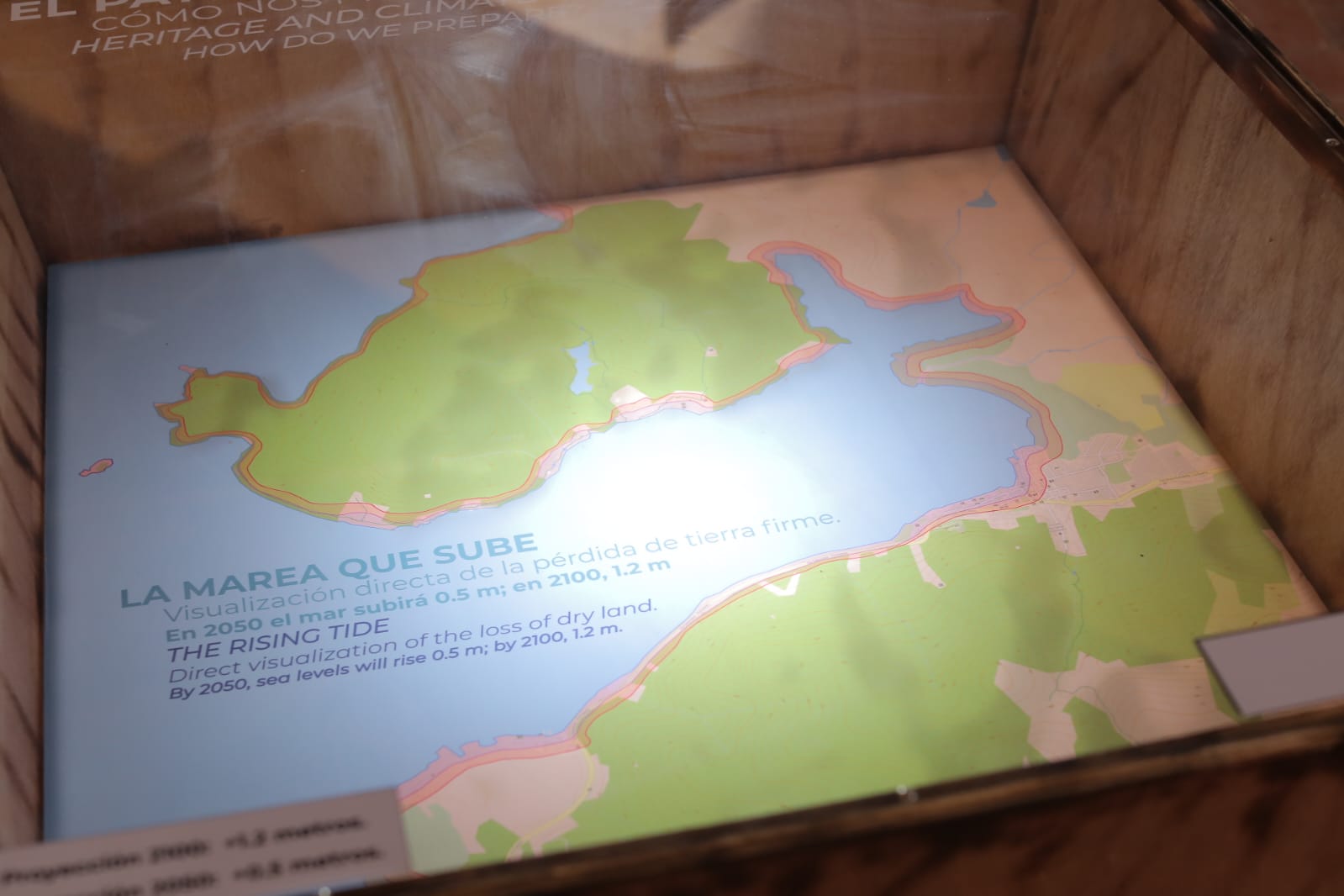
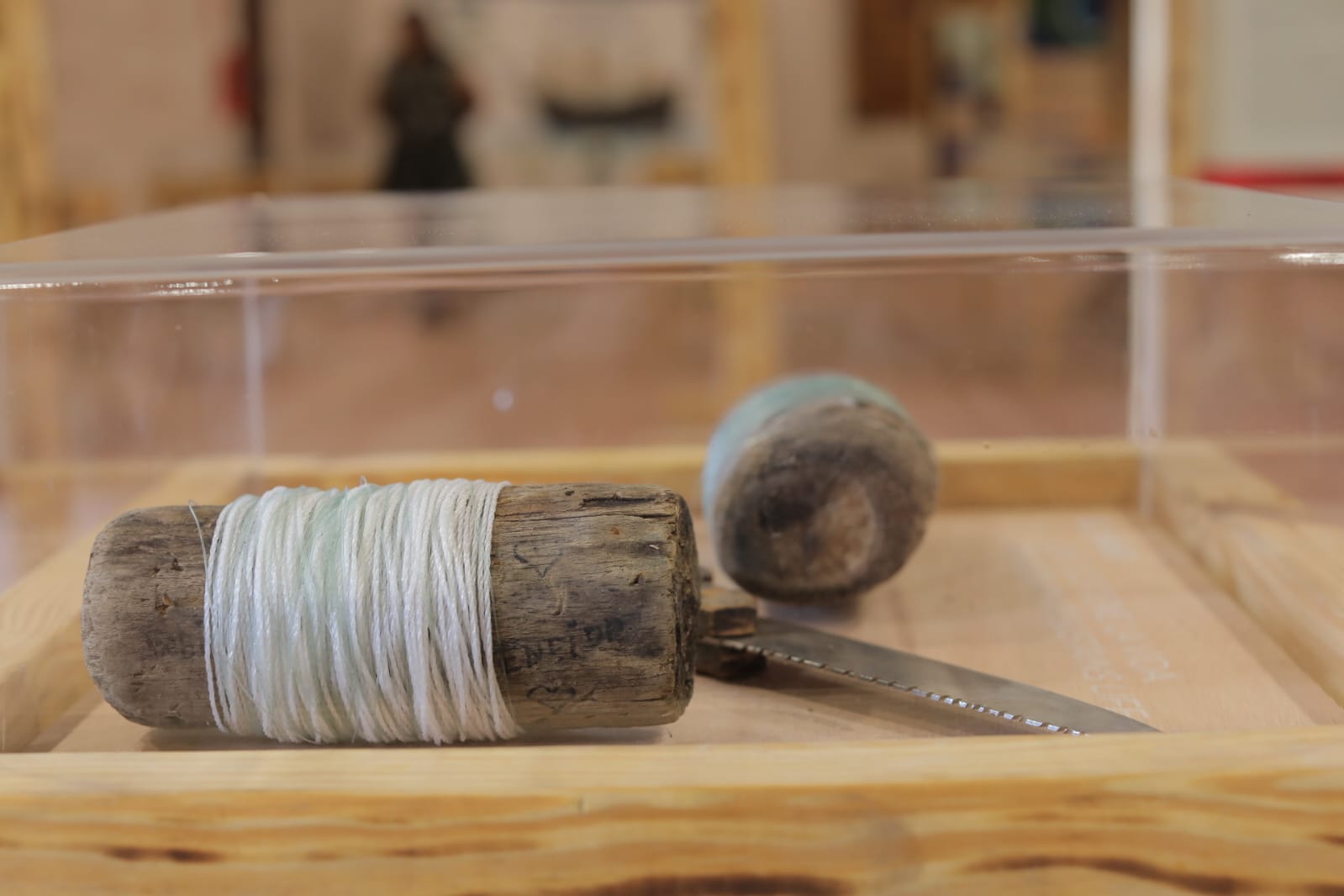
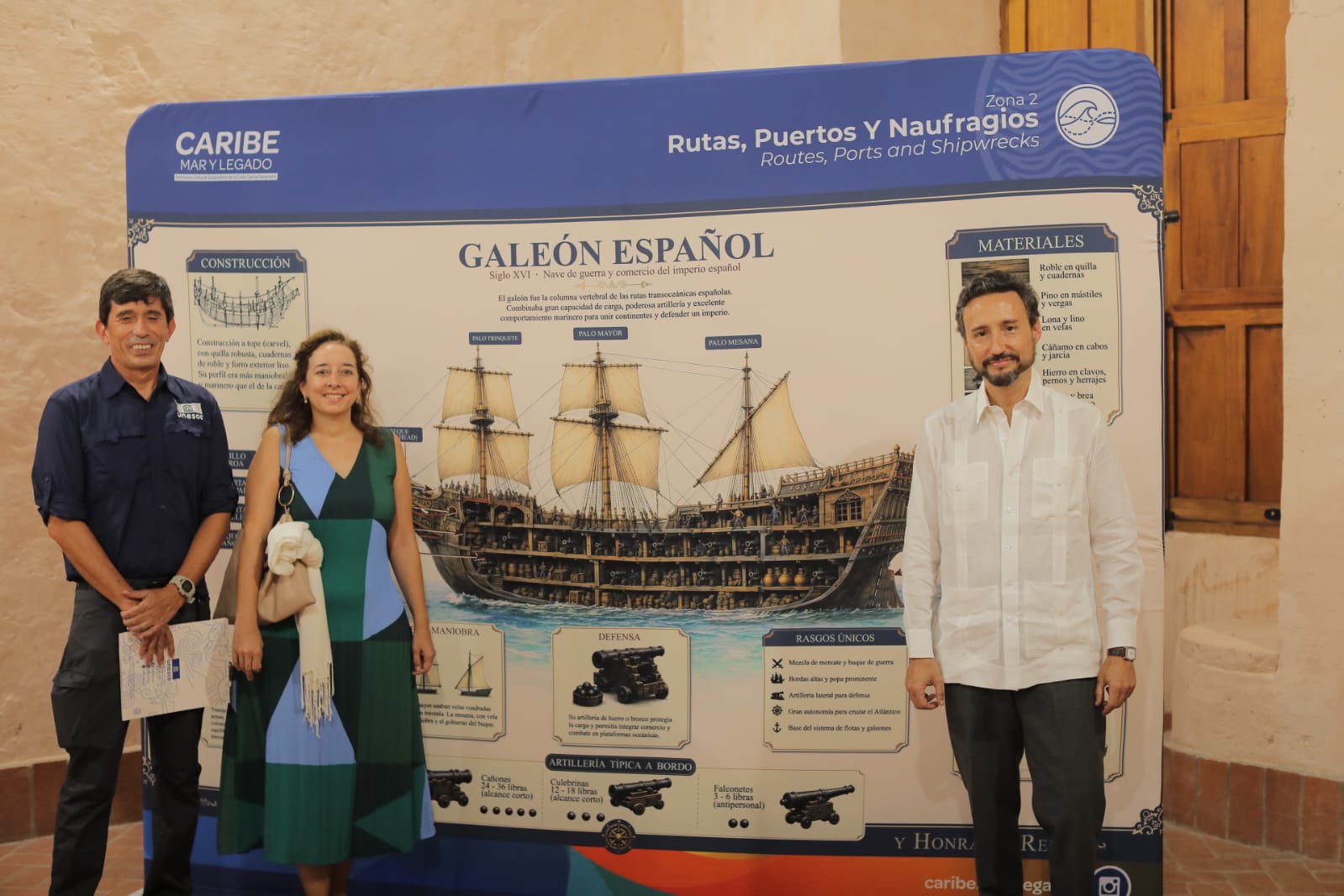
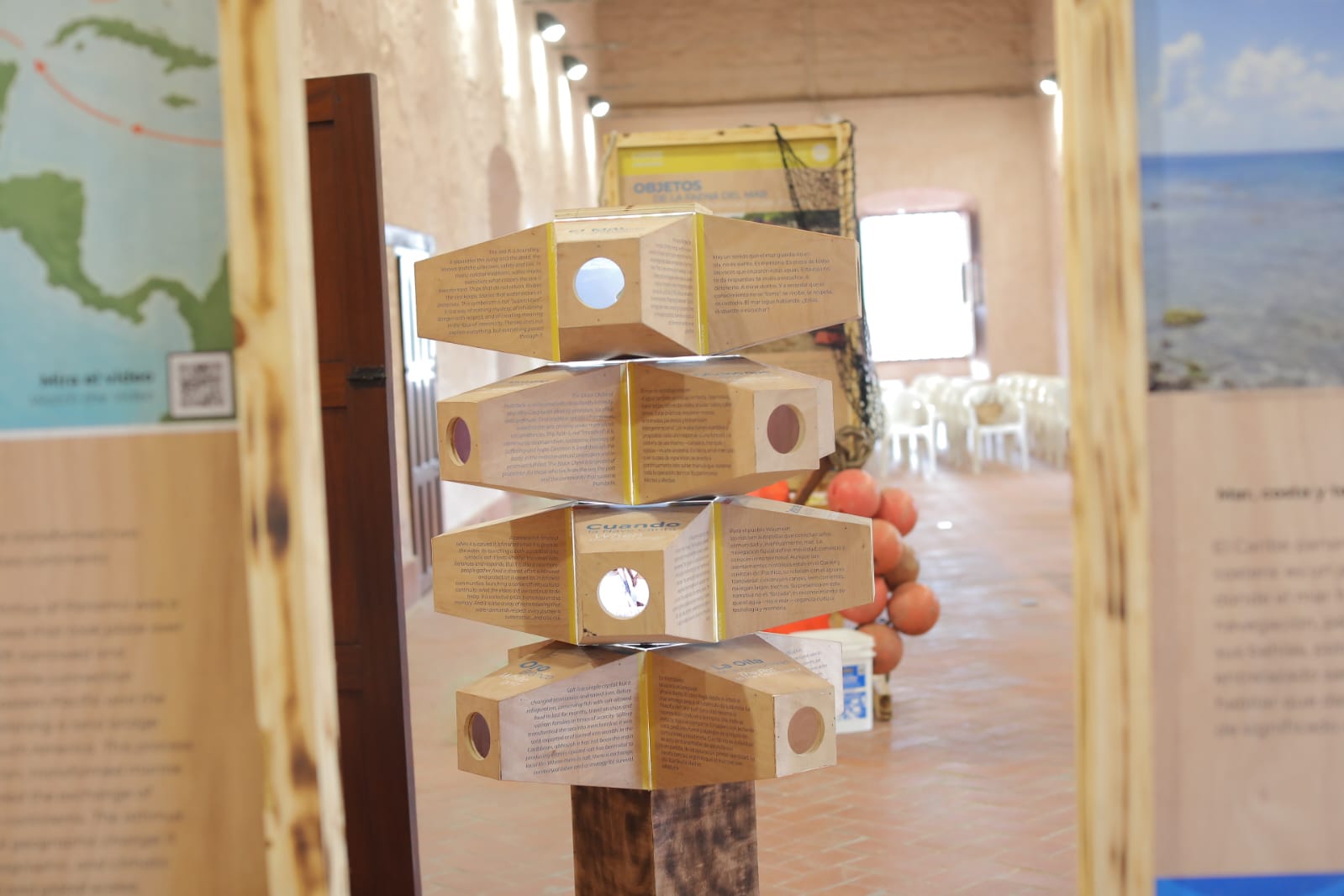
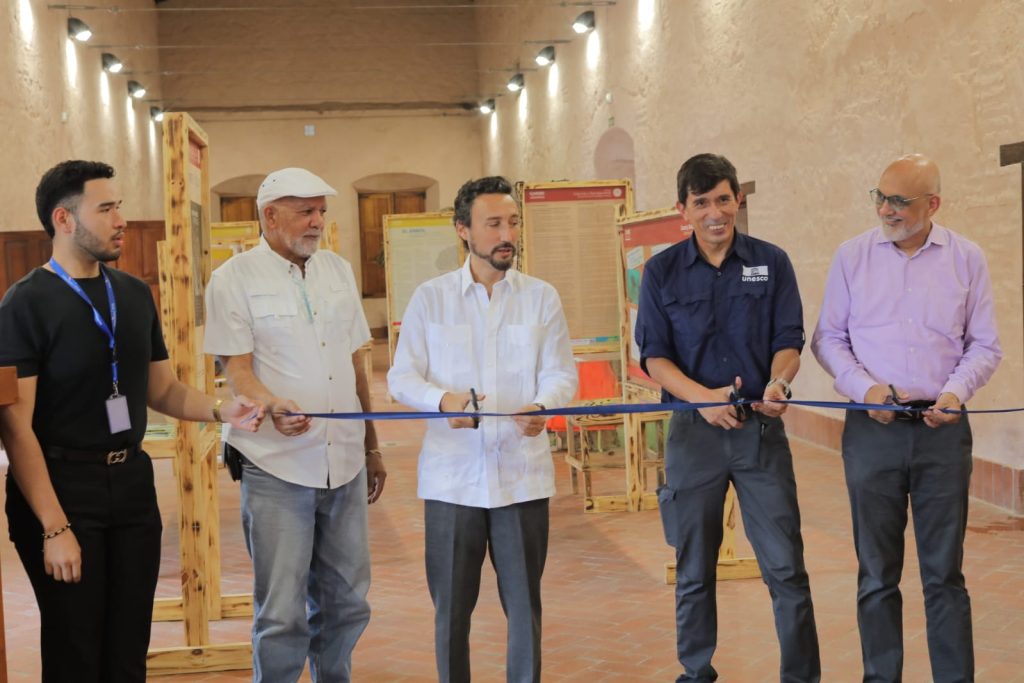
Panama, July 20, 2026. The former Royal Customs of Portobelo opened its doors to the exhibition "Caribbean, Sea and Legate: Underwater Cultural Heritage," an initiative advanced by the Ministry of Culture, the Embassy of the Kingdom of Spain, the UNESCO and the Spanish Agency for International Development Cooperation (AECID), that puts into value the extraordinary Underwater Cultural Heritage of the Panamanian Caribbean and promotes its conservation through research, education and community participation.
During the opening event, Spanish ambassador to Panama, Guzmán Palacios Fernández, emphasized the importance of cooperation between Spain, Panama and UNESCO to strengthen compliance with the 2001 Convention on the Protection of the Underwater Cultural Heritage. He noted that the exhibition aims to raise public awareness about the need to value and protect this legacy as a witness to the past, but also as a resource for sustainable development and strengthening communities.
The diplomat also emphasized that the sea has been a space for cultural exchange that has marked Panama's history and its relations with the world and stated that preserving the underwater heritage means protecting a collective memory that contributes to understanding the past and building the future.
On behalf of the Minister of Culture, María Eugenia Herrera, architect Manuel Trute, national director of Cultural Heritage, expressed that the exhibition constitutes an opportunity to bring citizenship closer to an essential part of the history that remains under the waters of the Caribbean of Panama.
"That exhibition invites us to look at our heritage from another depth and reminds us that protecting our history doesn't mean just keeping what's in clear sight. Underwater cultural heritage is an invaluable source of knowledge about our past and an important element to strengthen our identity and respect for the legacy that preserves the Panamanian sea," True stated.
For his part, Enrique Lopez-Hurtado, a specialist in culture at the UNESCO, emphasized that the exhibition forms part of the actions advanced by the organisation with the support of AECID to improve access, protection and dissemination of the underwater cultural heritage in the Caribbean.
He explained that the project had been developed in Panama, Dominican Republic, Mexico and Jamaica through training, institutional strengthening and awareness-raising programs especially for new generations.
He also emphasized that in Panama one of the main actions has been the training of youth from the province of Colón, who become fundamental partners for the protection and promotion of this heritage, strengthening the link between the community and its historic legacy.
At the event, special welcome was also given to the youth who participated in training on Underwater Cultural Heritage, developed by the Regional Office of the UNESCO in San José and the National Cultural Heritage Directorate, while recognizing their commitment as a generational shift to protecting this important legacy.
The sample forms part of the implementation of the 2001 Convention of the UNESCO on the Protection of the Underwater Cultural Heritage, ratified by Panama, and supported by the Spanish Trust Fund-UNESCO.
The exhibition will be open to the public at the Royal Customs of Portobelo. MiCultura invites students, researchers, visitors and the community at large to discover the historic wealth that remains under the waters of the Panamanian Caribbean and to recognize that there also lies a fundamental part of Panama's memory, identity and history.