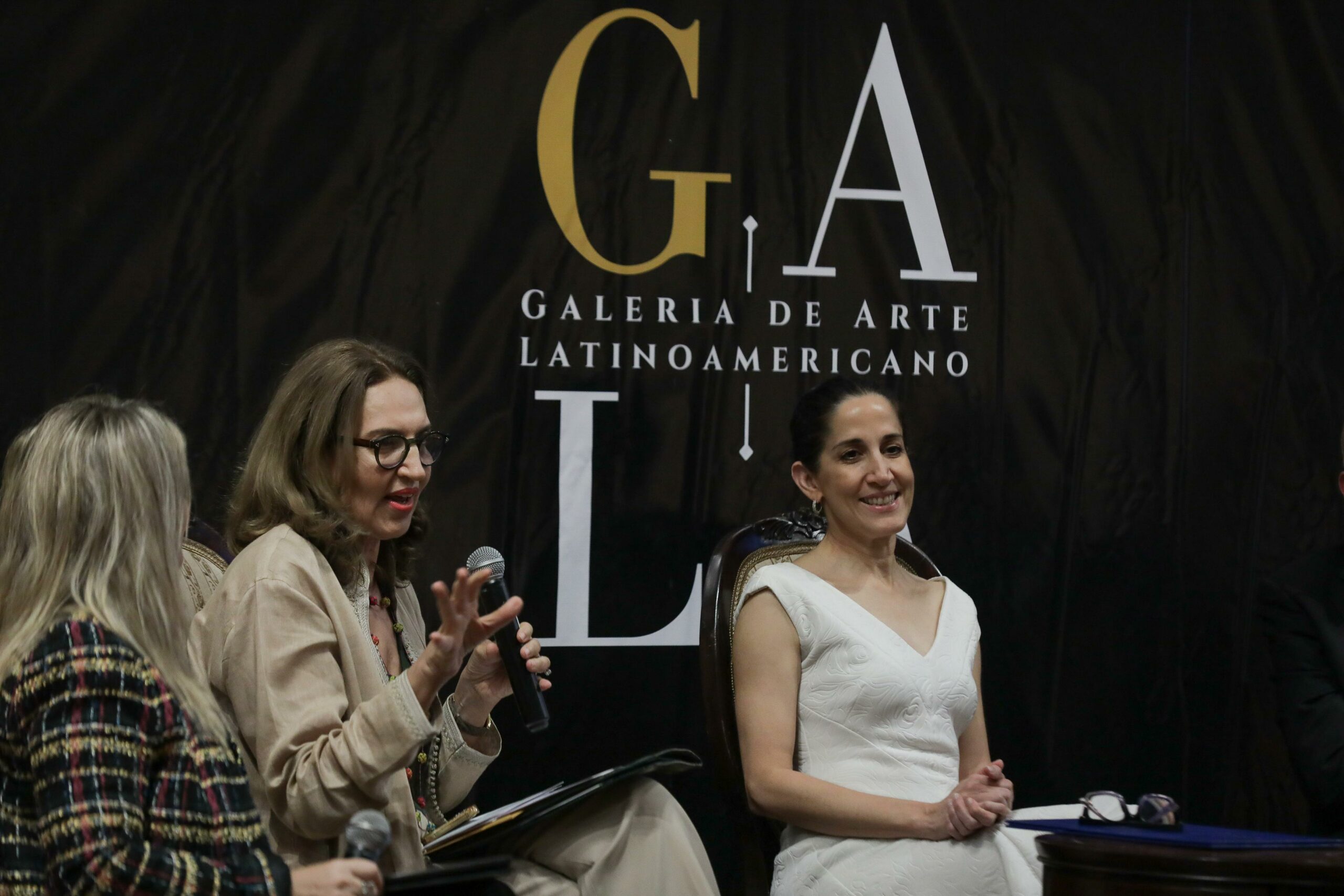
At an event at the Government Palace, the Minister of Culture, María Eugenia Herrera, emphasized the role of art as "soft power" and an engine of internation connection, national identity and economic development.
The "soft power" of art lies in its capacity to inspire, unite, influence, bring together and transform relations between countries, she explained during her shift at the expert panel.
"Art is a tool for understanding with other nations and peoples of the world, through the promotion of cultural values, cooperation and recognition of our history, traditions and cultural heritage," added Herrera.
The event, organized by the Latin American Art Gallery, GALA, served to explain how Panama was able to bring its art and culture to the world, using the soft power of cultural diplomacy.
To diplomatic and cultural authorities, the Minister presented Panama's advances with respect to cultural policy, such as the National Cultural Plan, the international promotion of Panamanian artists and the organization of events such as the Panama Art Biennial, the Panama Jazz Festival and Pinta Panama Art Week.
He also highlighted Panama's participation in international programs such as Ibermedia, Ibermusics and Iberescuesta, that have been promoting products known as Plaza Catedral and Panquiac. In the area of heritage, more than 300 archaeological pieces have been repatriated with the support of EL PACTO and the Panamanian diplomatic body.
The key initiatives mentioned:
The creation of a Cultural Fomento Certificado (CFC) to stimulate investment in the cultural sector.
The development of the Satellite Cultural Account, in partnership with the BID, to measure the economic contribution of art and culture.
Infrastructure projects such as the City of the Arts and cultural centers throughout the country.
Training programmes for youth such as the Workshop School, with AECID.
Finally, she emphasized that art was a tool of diplomacy, inclusion and social transformation and called for continuing to work with public and private alliances that advanced culture as a public good and law for all citizens.