
National Crafts Fair trained more than 785 artisan
Content of the News
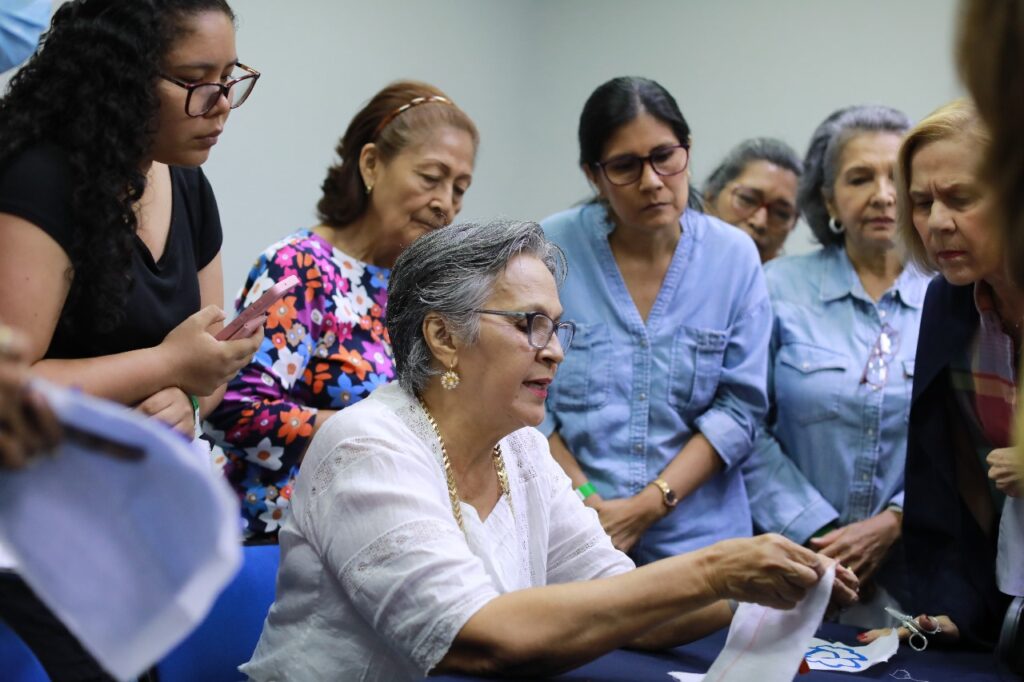
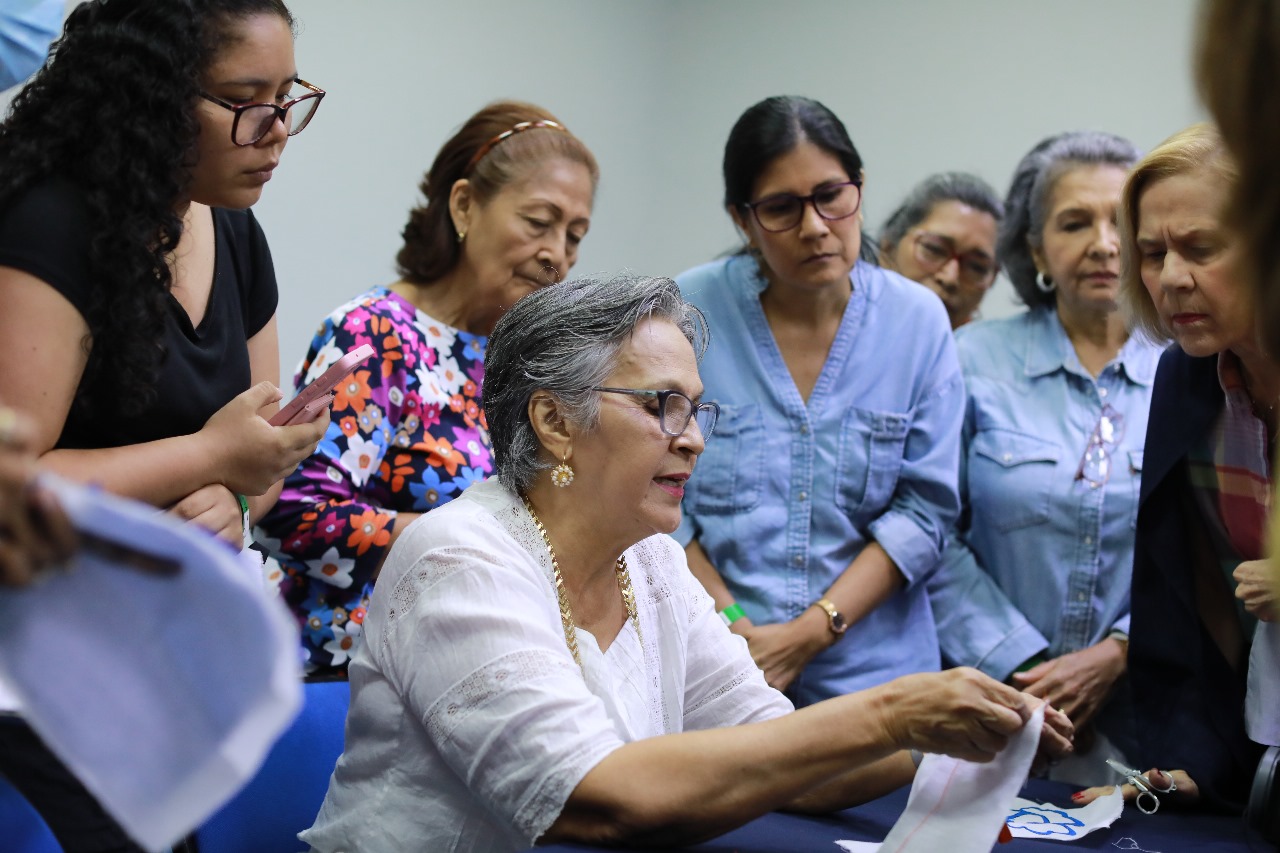
Around 785 artisan and public at large were trained at about 15 workshops, talks and lectures that were scheduled, by the Ministry of Culture (MiCultura), during the five days of the National Crafts Fair and that emphasized the proper use of traditional dressings, in the different lounges and spaces within the Atlapa Convention Center.
In this training interplay were high-end exhibitors, such as Rolando Domingo, Guadalupe Cañizalez, Eric Velasco, Majeya García, Diamantina Herrera, Ligia Grenald, Andrea Lino, Yhanisell Chavez. Bolívar González, Rolando Marín, Nisla Carolina Saurí, Gustavo Salazar, Yazmisel Quintero and Luis Camejo, who shared their knowledge.
The assistance resulted in an increased participation by 84 per cent of women while 16 per cent were men.
To this experience of training in "collective rights" have been added with entities such as Bank Delta and the Ministry of Trade and Industries (MICI) as well as with the National Institute for Human Development (INADEH), which held manual theoretical workshops about, traditional tipples and a dynamic workshop about "challenges of the camisola."
Panama's Guadeloupe Cañizales Folk developed the theme "The arrangement of Gala's pollera" in which she did a step-by-step demonstration about the placement of the pollera's blouse and peticote, the use of clothing and accessories, hair arrangements, partitira, placement of nipples, pajuelas and shivering, as well as the proper use of clothing.
For his part Diamantina Herrera, an entrepreneur and creator of the training program "Panamanian Hands for the World," filled the Boquete Salon with the theoretical workshop how to make the cuffs at pollera, in which she gave materials to those present to apply what was being explained.
In addition to the workshops, there was also opportunity to develop dialogues as "The Origin of Negritude: The Way of Unknown" by Ligia Grenald, who reported about the transatlantic of black groups, the use of turbines, paddles, plantations and Africa's passage to the Americas.
Meanwhile, at the Teatro La Huaca, Rolando Domingo with Eduardo Cano talked about the pollera and its history, and they shared with them their proper arrangement, under the title "The proper arrangement of the folkloric robes of Panama."
Other issues have been referred to as: "Handicrafts and copyright," "Traditional stitches," "Nagua Clothing," "Analyzing changes in the structure of the pollera" "Act No. 20 on Civil Rights of Indigenous Peoples and their traditional knowledge," "The Clothing of Men's T-shirts" and about "Traditional Indumentaria Embera."