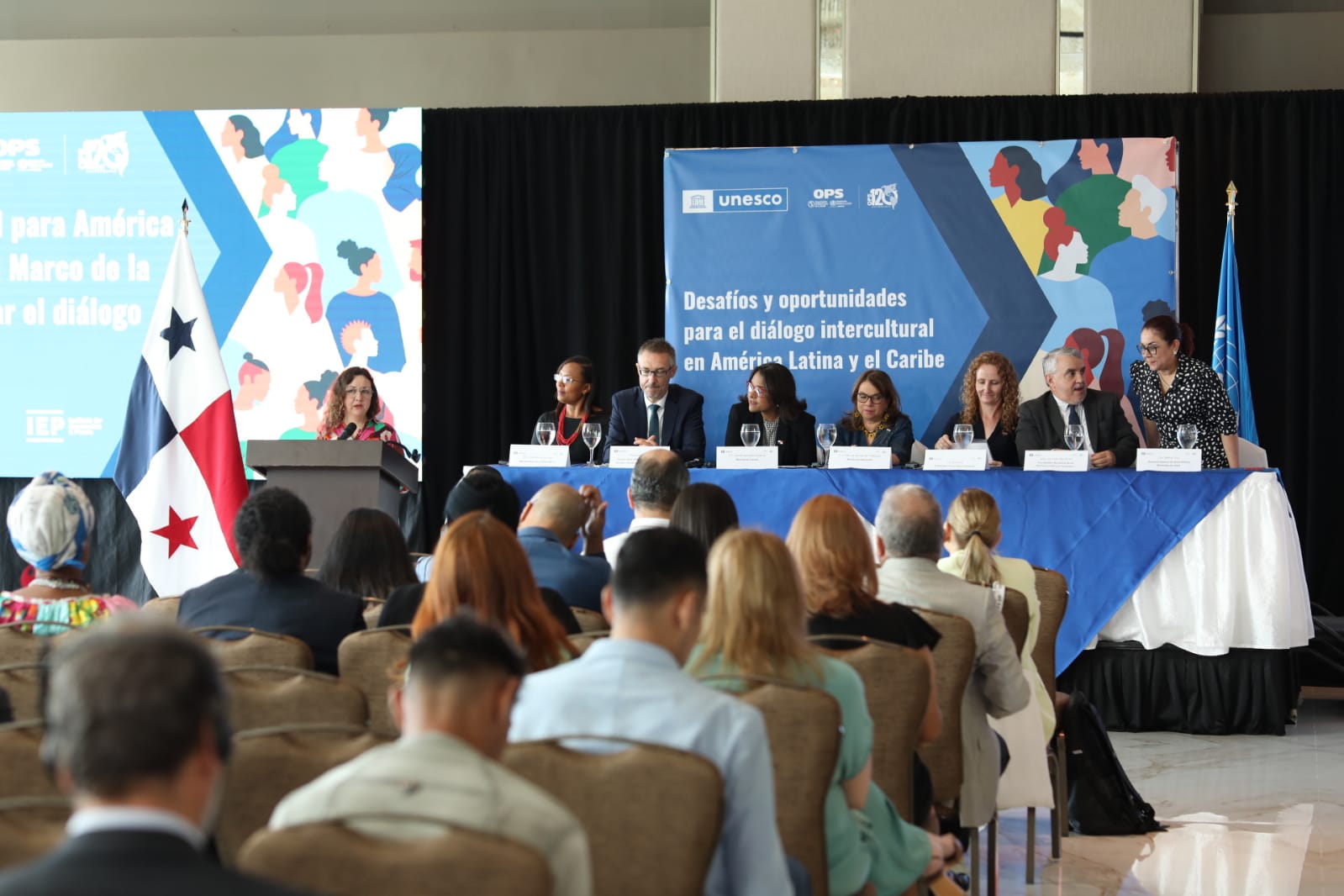
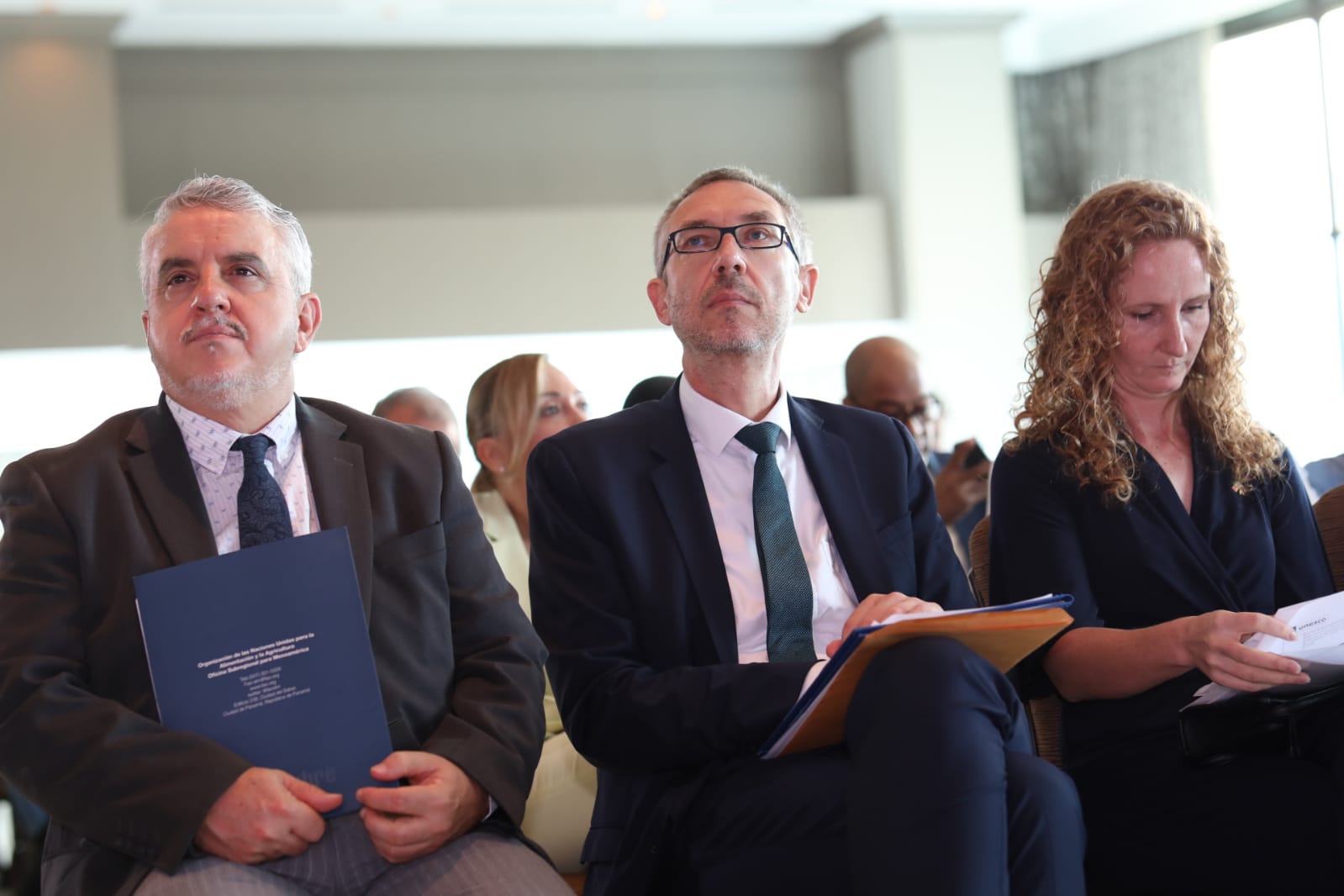
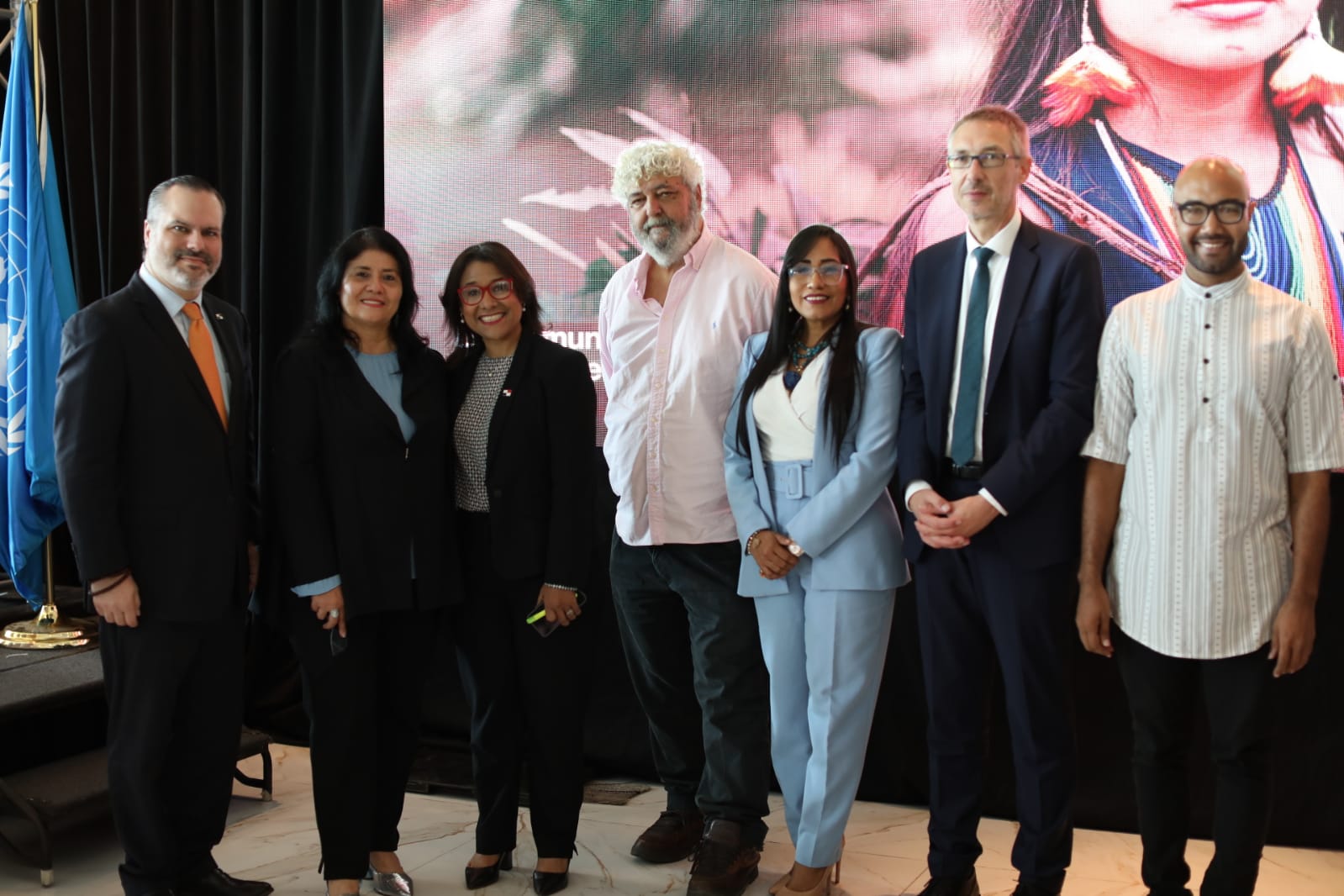
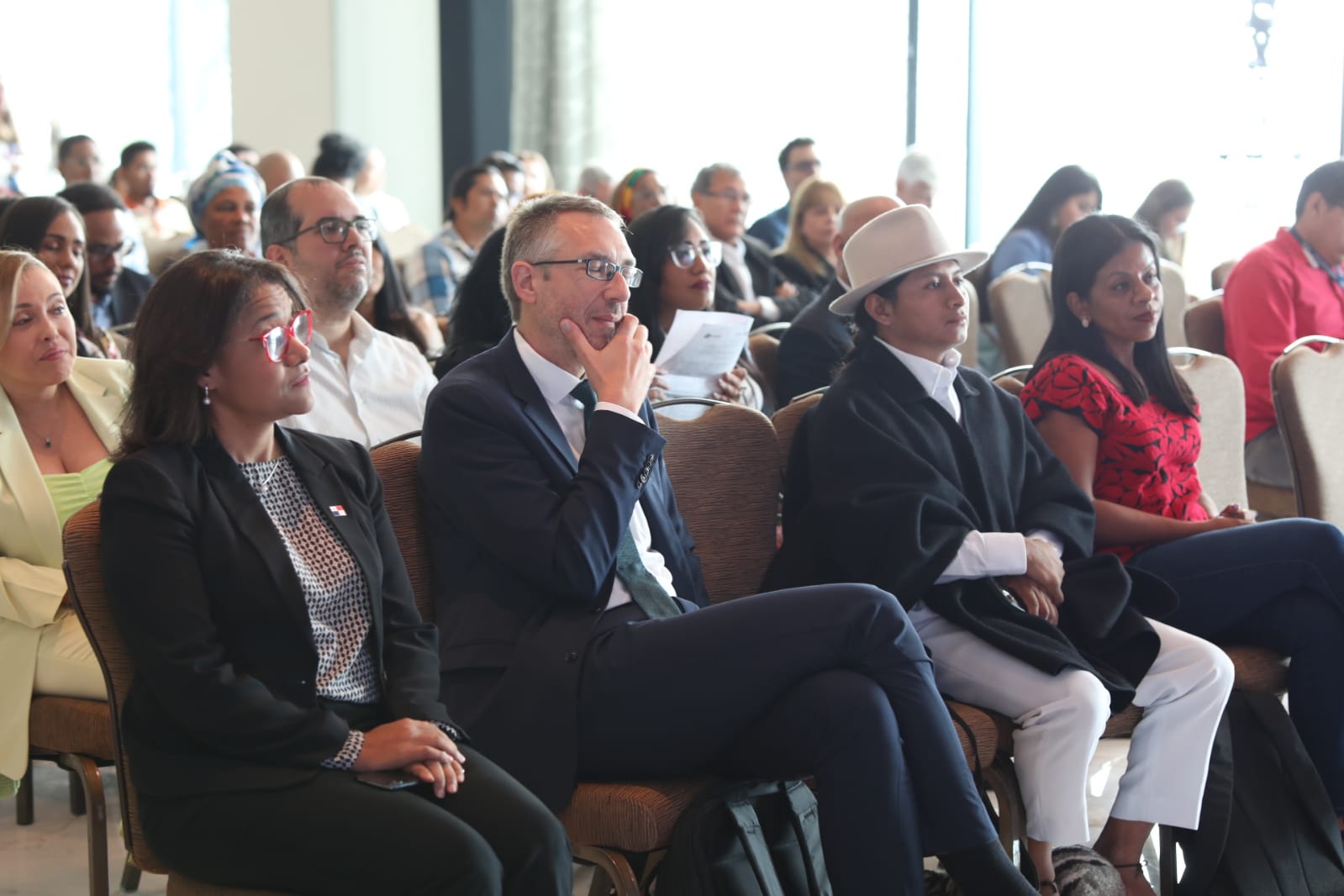
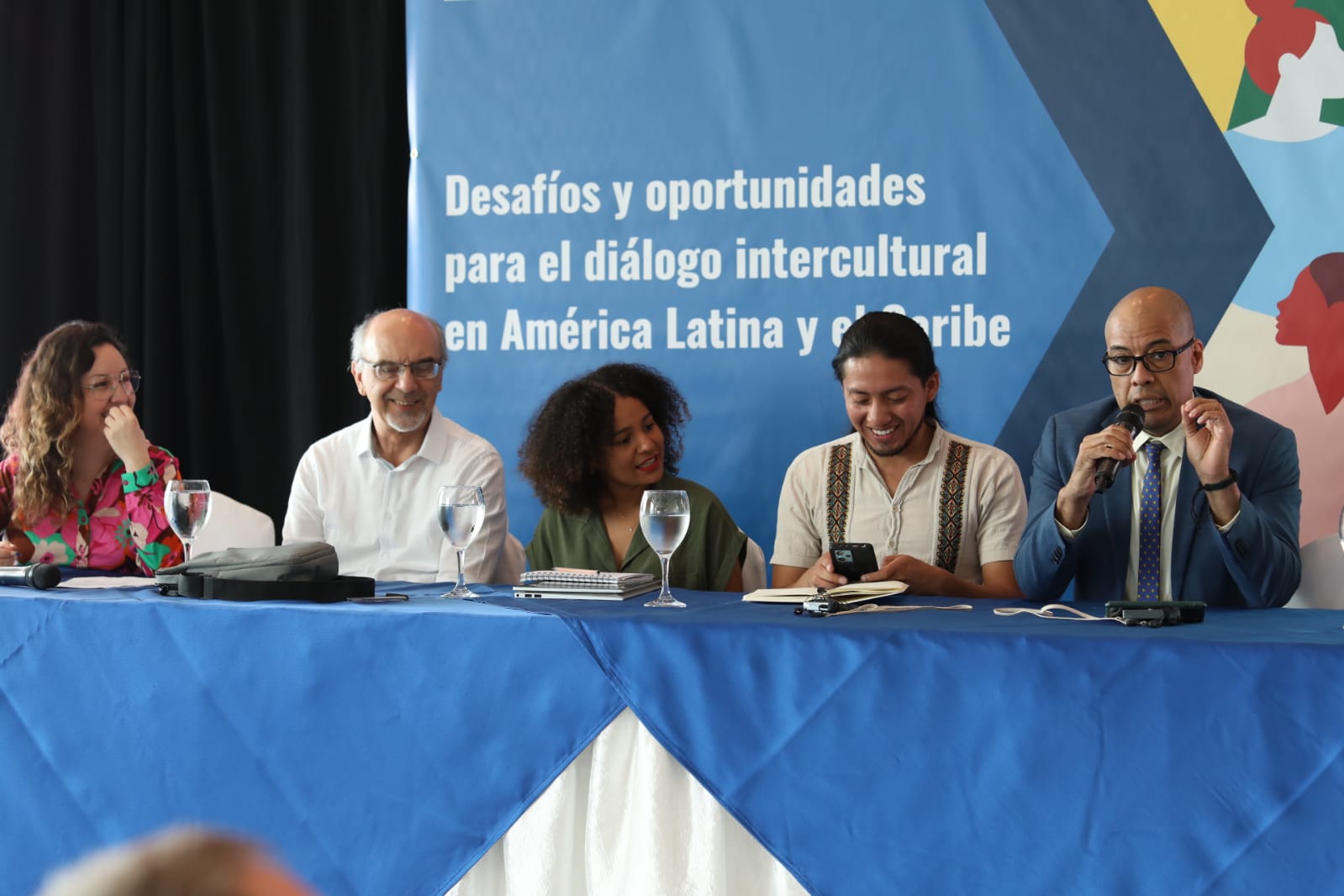
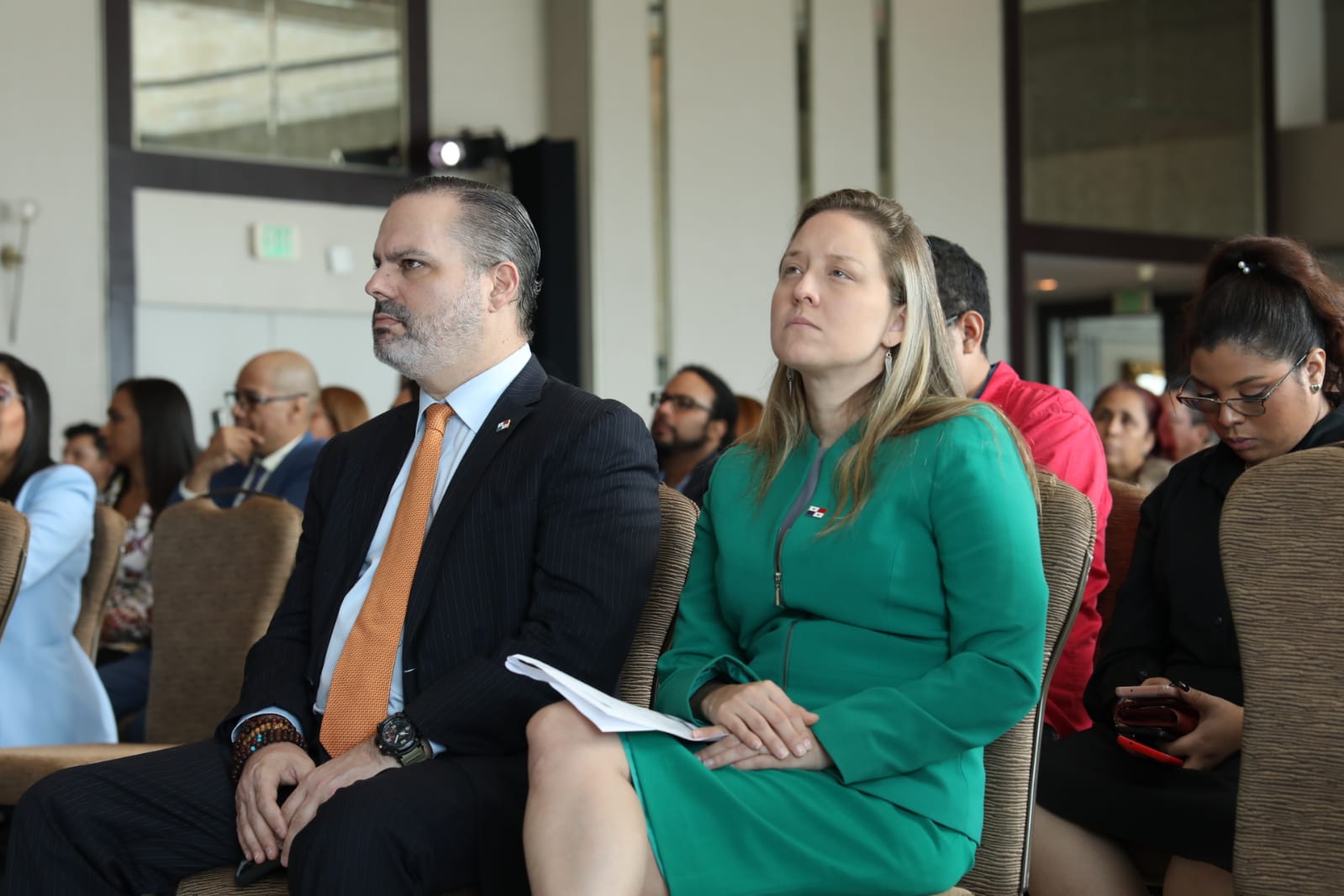
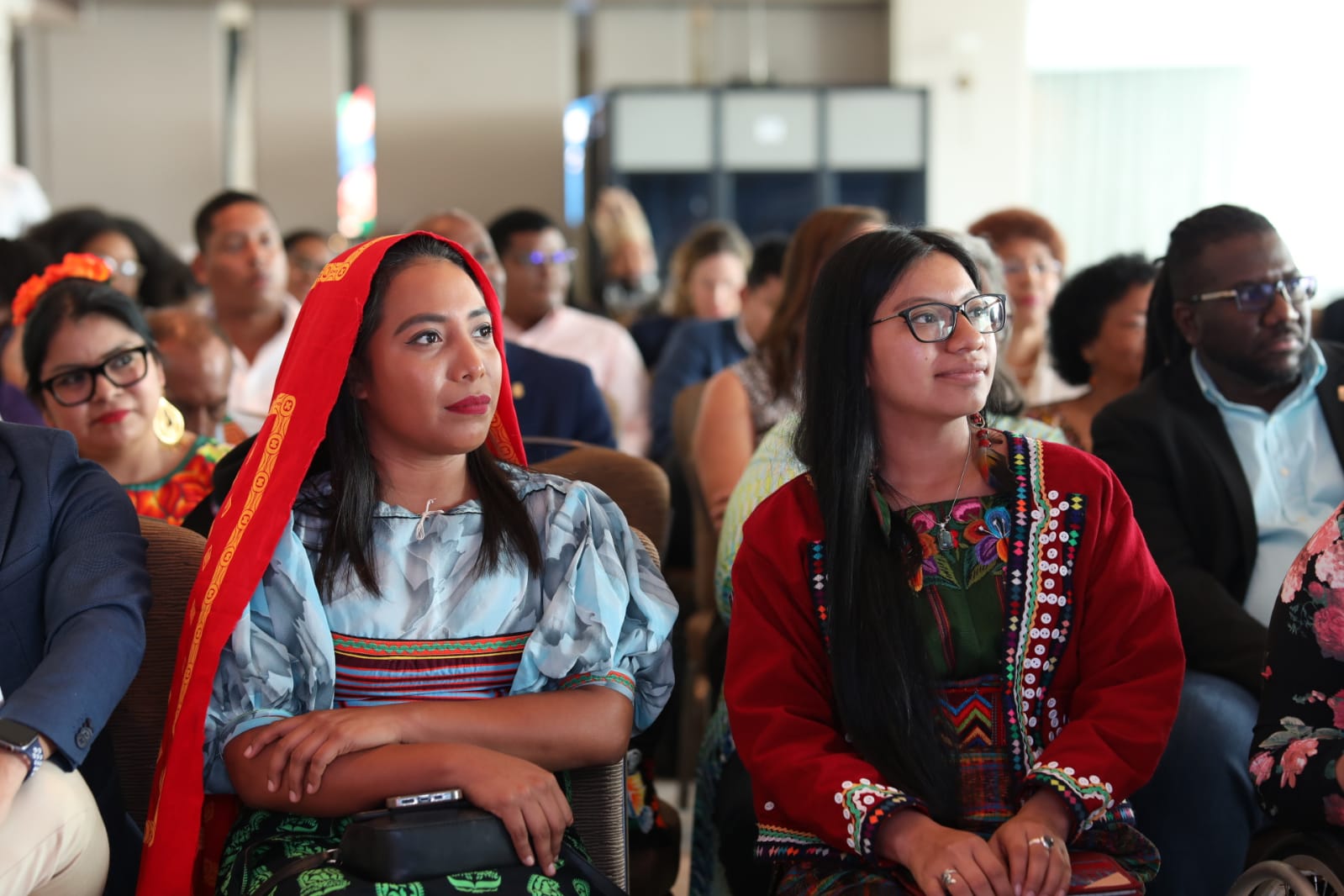
The Minister of Culture, Giselle González Villarrué, representing the National Government, attended the opening of the regional launch for Latin America and the Caribbean to enable intercultural dialogue, an event organized by UNESCO and jointly with the Pan American Health Organization (PAHO) and at which experts will discuss challenges and opportunities to address interculturality in the region.
In its participation, the regent of Panamanian culture reaffirmed "our commitment to continue to work together in the intercultural dialogue process that involves the National Plan for Culture, which will undoubtedly be an opportunity to strengthen and measure this path in the different participatory structures to reduce conflict, consolidate peace, social cohesion, stability, inclusion and vision of culture as a global public good, through the tool that cannot be missed: culture."
The National Government's commitment to strengthening intercultural dialogue and institution was emphasized by González Villarrué, presenting his achievements since the creation of the Ministry of Culture, such as the development of the Political Programme that studies and enalteces the linguistic wealth of the native Panamanian peoples, the opening of the Afro-Panamanian memory museum at the establishments of the Royal Customs of Portobelo, technical assistance with contiguous funds, for research and safeguard of Afro-African cultures or of the SICA and Cuba, with the support of Crespia and UNESCO for development in 2023.
He also referred to "Proyecto Dysonicias" that was developed last March with the theme "Genero and music in Iberoamerica," a space that brought together 25 professionals from Iberoaméricanand the "strengthening of the capabilities of community leaders and public managers for the safeguard of the Afro-descendant pCI of the CECC SICA and Cuba" of nine nations, among other actions that highlight interculturality.
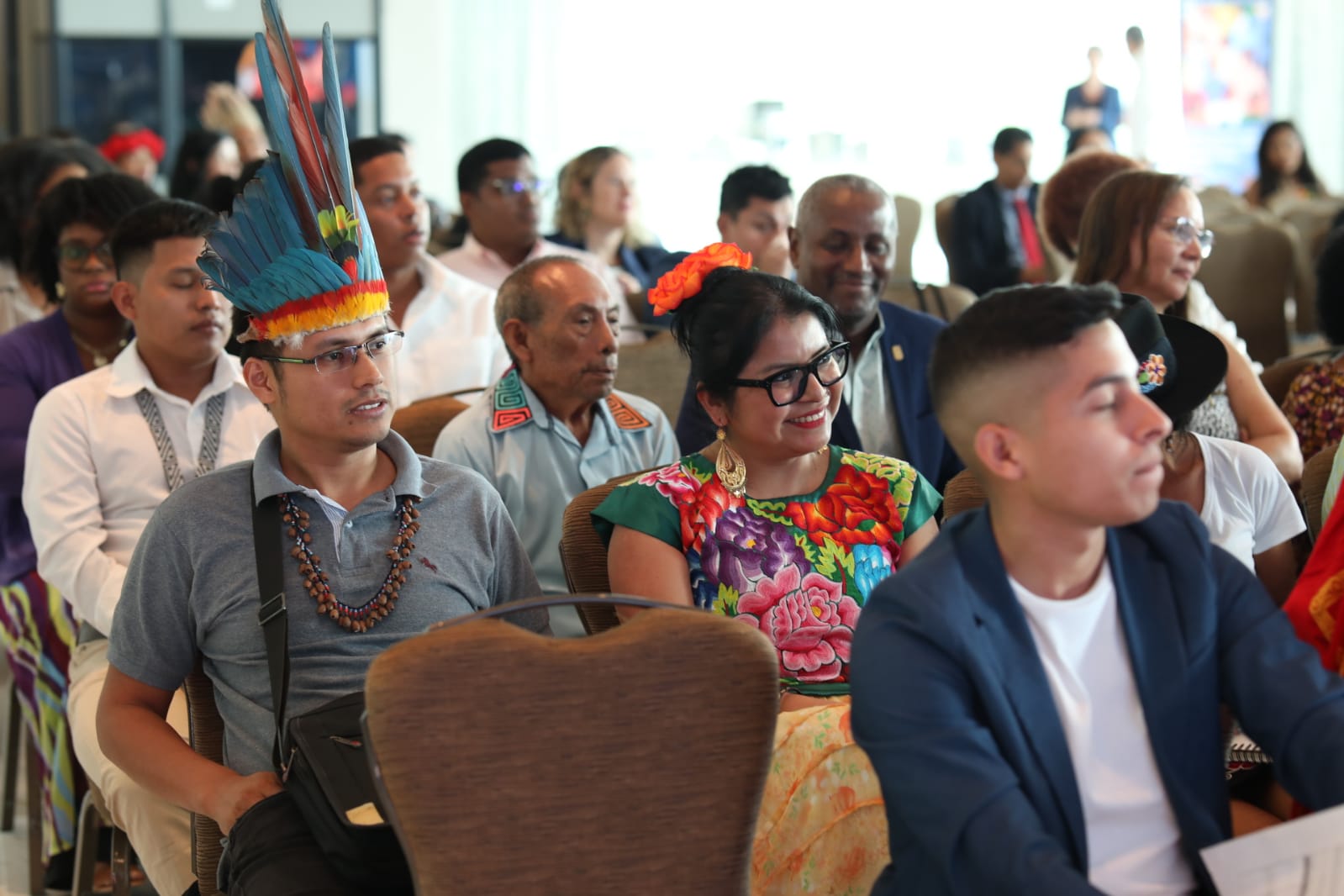
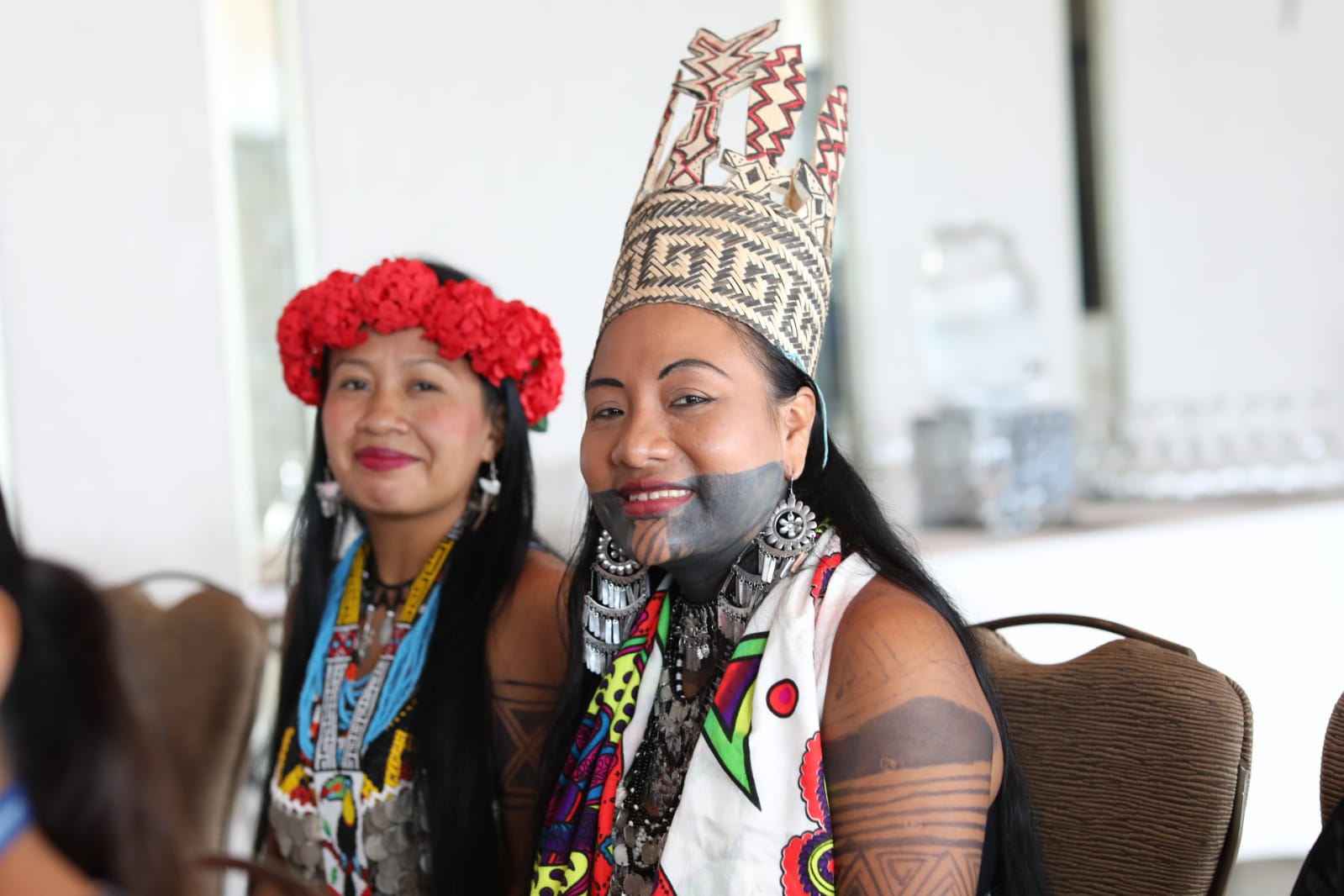
The exchange of experiences and knowledge among researchers, specialists from international agencies, local authorities, indigenous and community leaders will discuss several panels about rights to cultural accessibility, inclusion and integration as a tool against polarization and social exclusion, among others.
Within the spaces of conversation, Enrique Noel, director of Cultural Rights and Citizenship, participated in the panel "Fostering intercultural dialogue as a tool against polarization and social exclusion" where he emphasized interculturality dialogue and its power seen from a horizontal perspective that refers to mutual recognition and a vertical perspective about guaranteeing rights.
Likewise, Noel also referred to intercultural dialogue and participation for decision-making through different bodies and mechanisms, public policies with a differential approach and challenges to intercultural dialogue as climate change, empathy and artificial intelligence.