Machine translation. This content was automatically translated from Spanish. The Spanish version is the only official one: for all legal purposes, and in the event of any discrepancy, the original Spanish text prevails. View the official Spanish version

Back to blog

MiCultura provides as a loan pictorial and literary works to the Embassy of Panama in Costa Rica
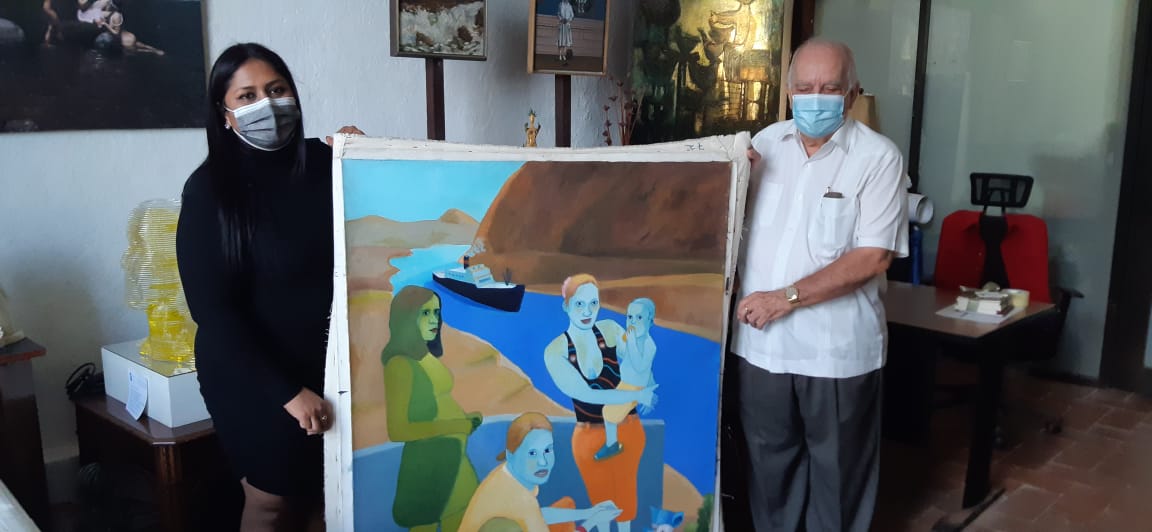
MiCultura provides as a loan pictorial and literary works to the Embassy of Panama in Costa Rica

Content of the News

The youth subcommission of the Bicentennial Commission introduced in its edition "the youth ask" through the Youtube Canal of the Ministry of Culture an interesting conversation with Melva Lowe de Goddin, teacher and author of the book Afro-descendants in the Isthmus of Panama 1501 to 2012 and member of this national commission dedicated to cultural and playful activities to commemorate the 200 years of the celebration of Panama's independence from Spain.

The teacher Lowe de Goodin began her intervention by explaining her experience as she was a university student in the United States in the 1960s and 1970s, a period characterized by the fight to uphold the human rights of American Black people, where Panamanian participated in countless marches, protests and learned a lot by monitoring everything that happened.

Lowe commented that she was still in that country while John F. Kennedy and his brother Robert Kennedy were killed and Martin Luther King were killed and that the pain she felt during those moments was recorded.

For two years she had an opportunity to teach at the University of Zambia, located in the central part of Africa, where she learned more about the idiosyncrasies of Africans and other countries of Africa.in 1973He felt that call to participate in his contributions, and united with groups headed by Alberto Barro, Gerardo Maloney and others who are still in that fight.

During the program she emphasized the important path of Reina Torres de Araúz, who planted the seed to unite and form the Afro-descendants community and that thanks to the studies that this remarkable anthropologist today we have the Afro-Antillano Museum that honors the memory of those who came from the Antilles, from the Caribbean islands for the construction of the Ferrocarril and the Canal of Panama, that is administered byMinistry of Culture of Panamaand supported by the Society of Friends of the Afro-Antillean Museum of Panama (SAMAAP).

To appreciate this conversation and other episodes of young people question, you can visit our youtube channel:https: / / www.youtube.com / watch? v = vnLKbRX _ Gwc